Understanding Drainage Problems on Parkland County Acreages
11 min read
Drainage issues are common on Alberta acreages. Learn what causes pooling water, soft ground, and poor runoff—and how proper planning can prevent long-term damage.
Drainage issues are common on Alberta acreages. Learn what causes pooling water, soft ground, and poor runoff—and how proper planning can prevent long-term damage.
11 min read
Prairie Acre Developments
423-53303 RR 31 Parkland County, AB
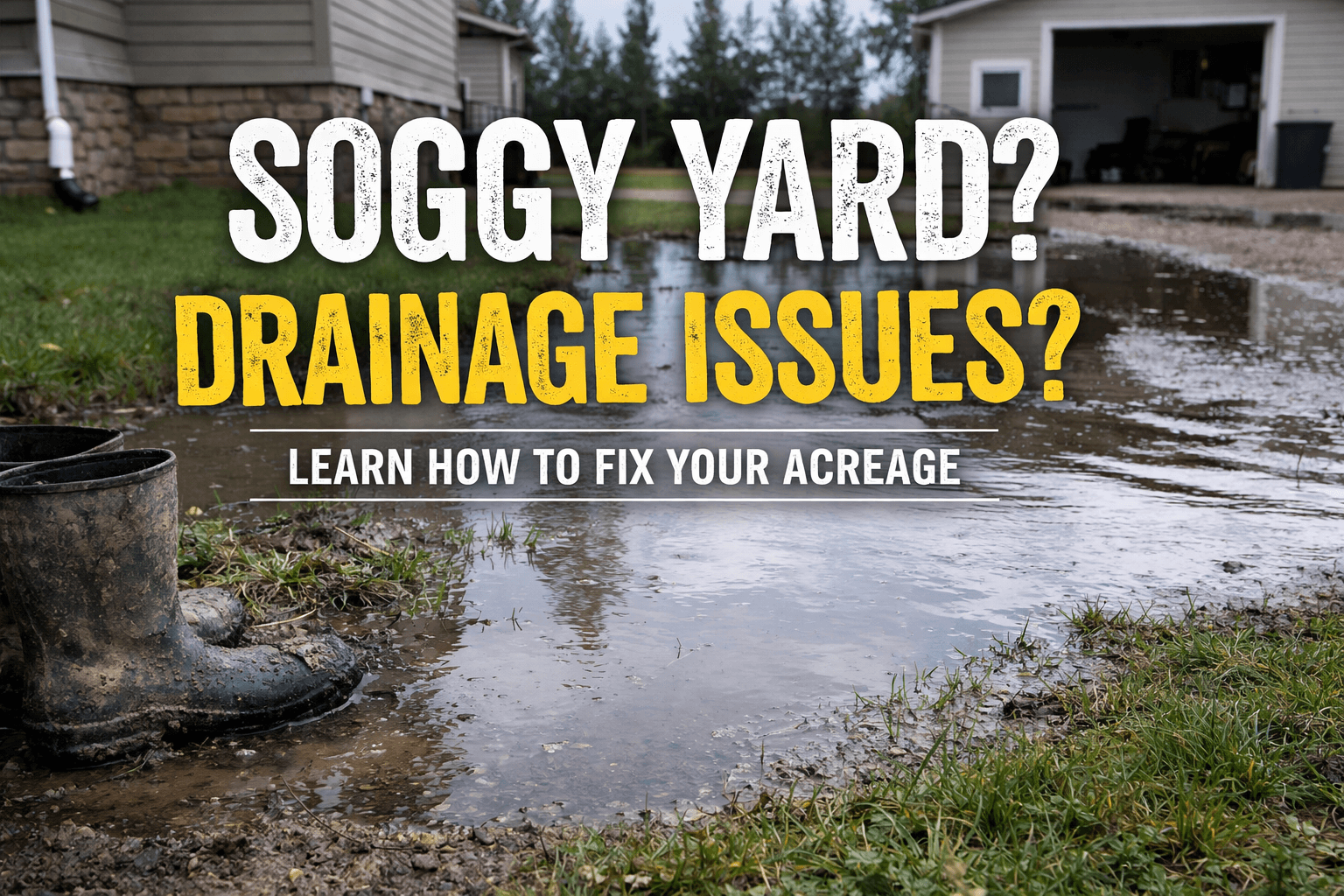
Drainage problems are one of the most common issues acreage owners face in Alberta. Soft ground near the house, standing water after rain, or areas that never seem to dry out are all signs that water isn’t moving the way it should.
Many people assume this is just part of country living. In reality, most drainage problems come down to grading, water flow, and how the land was shaped when the property was developed.
Understanding how water moves across your acreage is the first step to fixing the problem properly and preventing long-term damage — often through proper rough grading and final grading rather than temporary fixes.
Drainage problems rarely show up overnight. They usually develop slowly as small changes add up.
When a property is first built, the land may not be graded correctly, or future changes may alter how water flows. Over time, even minor additions can affect drainage patterns.
Common changes that contribute to drainage issues include:
Soil settling around foundations
New structures like garages, sheds, or decks
Driveways or pads added without drainage planning
Changes to downspouts or rainwater management
Water always follows the easiest path. If the land doesn’t guide it away from buildings, it will find places to collect instead — especially where grading was never corrected after construction.
Most drainage problems are not caused by the amount of rainfall, but by how water is handled after it hits the ground.
Poor grading can cause water to move toward buildings instead of away from them. Compacted surfaces like driveways can trap water. Low spots near foundations can hold moisture long after rain stops.
Once water starts pooling, it creates soft ground, erosion, and long-term issues that only get worse if left unaddressed. In many cases, small grading corrections using skid steer services can redirect water before major damage occurs.
Downspouts that discharge too close to the house concentrate water right at the foundation. Water should be directed well away from structures whenever possible.
Rain barrels are useful, but overflow or open hoses can release large volumes of water beside buildings if not managed carefully.
Ground that slopes toward a house, garage, or shop will naturally pull water in that direction. Proper grading — especially final grading around structures — should always move water away.
As soil settles around foundations, it can create low areas that trap water. These spots often go unnoticed until problems appear and usually require minor regrading to correct.
Gravel or concrete surfaces installed without considering drainage can block natural water flow or redirect it into problem areas. Correcting this often involves rough grading and skid steer work to restore proper drainage paths.
Drainage issues affect more than just appearance.
Over time, poor water management can lead to:
Foundation cracking or moisture intrusion
Soft or unstable ground near buildings
Gravel driveways washing out or rutting
Ice buildup during winter freeze-thaw cycles
Dead grass, stressed trees, and poor soil conditions
Fixing drainage early — often during rough grade or final grade corrections — is usually far less costly than repairing damage later.
Some warning signs are easy to miss unless you know what to look for.
Common indicators include:
Standing water near buildings after rainfall
Ground that stays wet days after rain
Gravel shifting or sinking in driveways
Damp spots or staining on foundations
Frost heaving or uneven settlement
Low areas that remain soft or muddy
These signs usually mean water is not being directed properly across the property and that grading or surface drainage adjustments may be needed.
Drainage solutions work best when they’re based on accurate information, not guesswork.
We assess properties using survey-grade tools, precise elevation data, and site planning techniques to understand exactly how water is moving across the land.
Depending on the site, solutions may include:
Minor regrading
Swales or surface drainage features
Adjusting slopes around structures
Improving water flow around driveways and pads using skid steer services
The goal is always the same: move water safely away from buildings and high-traffic areas.
Drainage work is most effective when it’s planned correctly from the start.
Small grading adjustments made at the right time — whether during rough grading or final grading — can prevent ongoing problems and eliminate the need for repeated fixes. Clear planning also helps ensure drainage improvements work with future projects like landscaping, driveways, or new buildings.
Drainage issues are common on acreages, but they’re rarely unavoidable.
With the right assessment and a clear plan, most water problems can be corrected and prevented from returning. The key is understanding how water moves across your land and addressing issues before they cause larger damage.
If you’re noticing wet areas, pooling water, or soft ground on your property, a quick site review can help identify what’s going on and what options make sense moving forward.
A short conversation early on can save time, reduce future costs, and help protect your acreage long-term.
Drainage problems are one of the most common issues acreage owners face in Alberta. Soft ground near the house, standing water after rain, or areas that never seem to dry out are all signs that water isn’t moving the way it should.
Many people assume this is just part of country living. In reality, most drainage problems come down to grading, water flow, and how the land was shaped when the property was developed.
Understanding how water moves across your acreage is the first step to fixing the problem properly and preventing long-term damage — often through proper rough grading and final grading rather than temporary fixes.
Drainage problems rarely show up overnight. They usually develop slowly as small changes add up.
When a property is first built, the land may not be graded correctly, or future changes may alter how water flows. Over time, even minor additions can affect drainage patterns.
Common changes that contribute to drainage issues include:
Soil settling around foundations
New structures like garages, sheds, or decks
Driveways or pads added without drainage planning
Changes to downspouts or rainwater management
Water always follows the easiest path. If the land doesn’t guide it away from buildings, it will find places to collect instead — especially where grading was never corrected after construction.
Most drainage problems are not caused by the amount of rainfall, but by how water is handled after it hits the ground.
Poor grading can cause water to move toward buildings instead of away from them. Compacted surfaces like driveways can trap water. Low spots near foundations can hold moisture long after rain stops.
Once water starts pooling, it creates soft ground, erosion, and long-term issues that only get worse if left unaddressed. In many cases, small grading corrections using skid steer services can redirect water before major damage occurs.
Downspouts that discharge too close to the house concentrate water right at the foundation. Water should be directed well away from structures whenever possible.
Rain barrels are useful, but overflow or open hoses can release large volumes of water beside buildings if not managed carefully.
Ground that slopes toward a house, garage, or shop will naturally pull water in that direction. Proper grading — especially final grading around structures — should always move water away.
As soil settles around foundations, it can create low areas that trap water. These spots often go unnoticed until problems appear and usually require minor regrading to correct.
Gravel or concrete surfaces installed without considering drainage can block natural water flow or redirect it into problem areas. Correcting this often involves rough grading and skid steer work to restore proper drainage paths.
Drainage issues affect more than just appearance.
Over time, poor water management can lead to:
Foundation cracking or moisture intrusion
Soft or unstable ground near buildings
Gravel driveways washing out or rutting
Ice buildup during winter freeze-thaw cycles
Dead grass, stressed trees, and poor soil conditions
Fixing drainage early — often during rough grade or final grade corrections — is usually far less costly than repairing damage later.
Some warning signs are easy to miss unless you know what to look for.
Common indicators include:
Standing water near buildings after rainfall
Ground that stays wet days after rain
Gravel shifting or sinking in driveways
Damp spots or staining on foundations
Frost heaving or uneven settlement
Low areas that remain soft or muddy
These signs usually mean water is not being directed properly across the property and that grading or surface drainage adjustments may be needed.
Drainage solutions work best when they’re based on accurate information, not guesswork.
We assess properties using survey-grade tools, precise elevation data, and site planning techniques to understand exactly how water is moving across the land.
Depending on the site, solutions may include:
Minor regrading
Swales or surface drainage features
Adjusting slopes around structures
Improving water flow around driveways and pads using skid steer services
The goal is always the same: move water safely away from buildings and high-traffic areas.
Drainage work is most effective when it’s planned correctly from the start.
Small grading adjustments made at the right time — whether during rough grading or final grading — can prevent ongoing problems and eliminate the need for repeated fixes. Clear planning also helps ensure drainage improvements work with future projects like landscaping, driveways, or new buildings.
Drainage issues are common on acreages, but they’re rarely unavoidable.
With the right assessment and a clear plan, most water problems can be corrected and prevented from returning. The key is understanding how water moves across your land and addressing issues before they cause larger damage.
If you’re noticing wet areas, pooling water, or soft ground on your property, a quick site review can help identify what’s going on and what options make sense moving forward.
A short conversation early on can save time, reduce future costs, and help protect your acreage long-term.