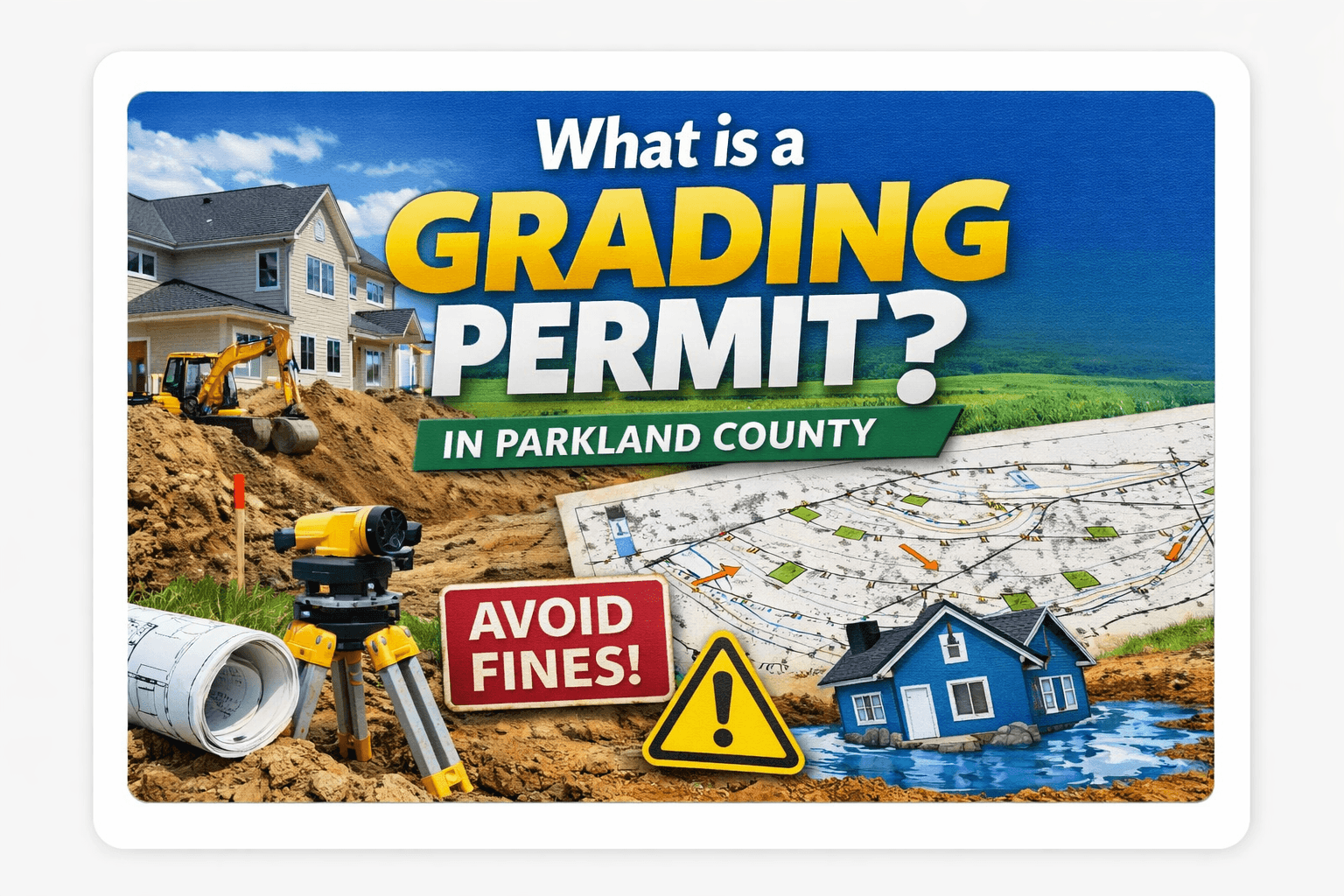
Acreage Planning & Permits in Parkland County: How to Plan Your Land the Right Way
11 min read
Planning an acreage project in Parkland County? Learn how proper acreage planning helps you submit permit-ready plans that work long-term for your land.
Planning an acreage project in Parkland County? Learn how proper acreage planning helps you submit permit-ready plans that work long-term for your land.
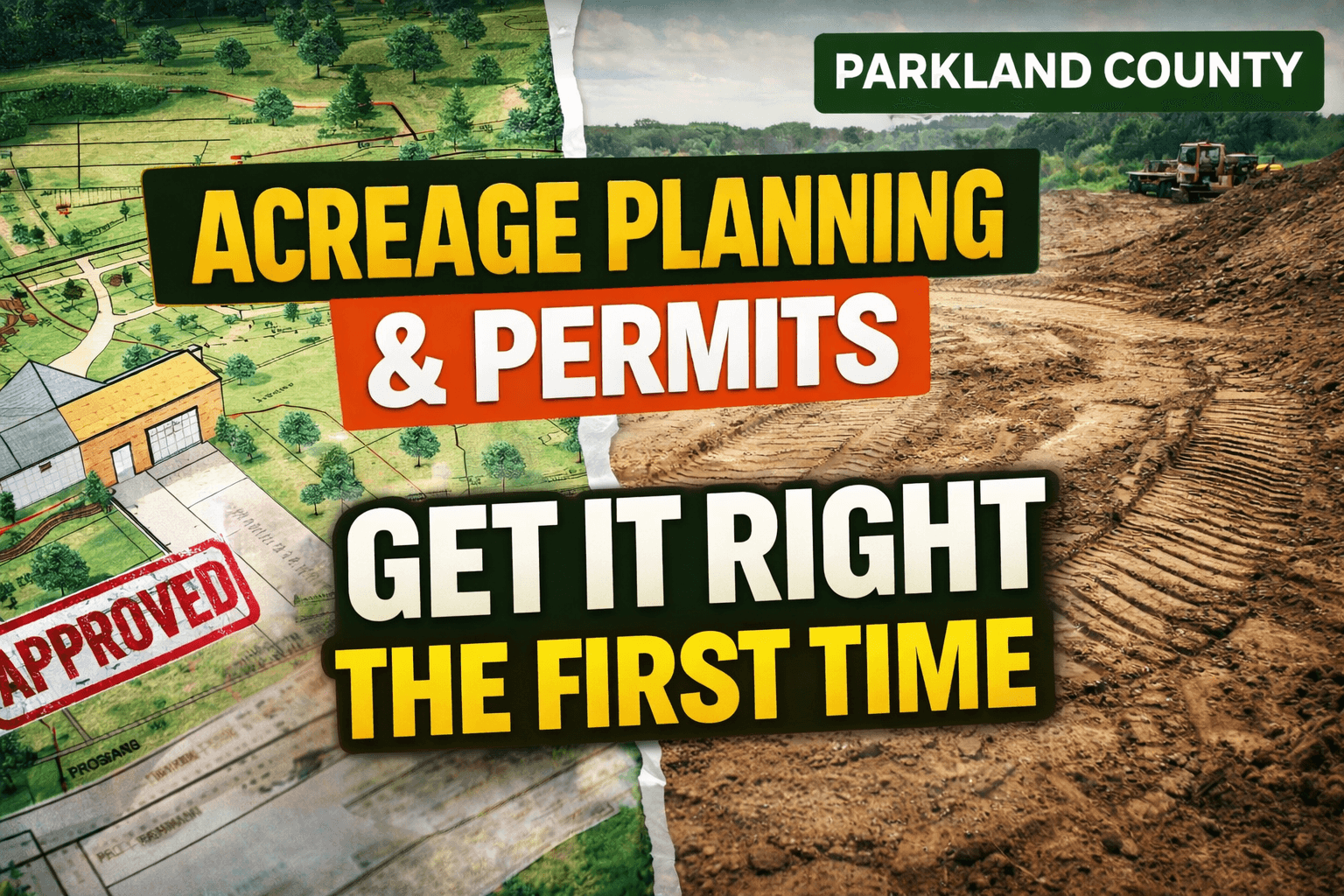
11 min read
Prairie Acre Developments
423-53303 RR 31 Parkland County, AB
If you’re planning a garage, shop, grading work, or a new build on an acreage in Parkland County, one of the first things you’ll hear is that you need a permit. For many acreage owners, that’s where the uncertainty starts.
Throughout our work with acreage owners across Parkland County, we’ve seen that the biggest challenge usually isn’t the permit itself — it’s figuring out how to plan the property properly before submitting anything to the county.
A permit application is built around a plan. That plan determines not only whether the county approves your project, but also whether your property layout works long-term for access, drainage, and future use.
This blog explains how the Parkland County permit process starts, why planning matters more than most people realize, and how acreage planning helps ensure the plan you submit is the best use of your land — not just something that gets approved.
Most acreage projects in Parkland County require a Development Permit. This includes common projects such as:
Detached garages and shops
New accessory buildings
Property grading or drainage changes
New development or additions
The permit process begins when the county reviews drawings and documents that show what you want to build and where it will be located on the property. The permit process begins when the county reviews drawings and documents that show what you want to build and where it will be located on the property. This is where acreage planning becomes critical, because the layout decisions made at this stage affect both permit approval and long-term use of the land.
At the center of that review is a site plan.
A site plan allows the county to assess compliance with setbacks, access, land use rules, and drainage considerations. Without a clear plan, permit applications are often delayed while additional information is requested.
While the county reviews a site plan for compliance, the same plan quietly determines how your acreage functions for years to come.
A site plan typically shows:
Property boundaries
Existing buildings
Proposed buildings or site work
Distances to property lines
Driveway access points
Locations of wells and septic systems
This is why working through proper acreage planning services before submitting a permit is so important. From a homeowner’s perspective, this plan answers much bigger questions:
Is this the best location for the building?
Will this layout limit future projects?
Will drainage or access become an issue later?
Am I using the land efficiently?
Once a permit is approved and construction begins, changing the layout is costly. Planning first ensures the plan you submit works long-term — not just on paper.
Many permit issues — and long-term property problems — come down to poor early planning.
Common problems we see include:
Buildings placed without considering drainage patterns
Driveways that don’t work well year-round
Limited space for future shops or additions
Conflicts between buildings, septic systems, and wells
In Parkland County, grading and drainage may also be regulated under the county’s Surface Drainage and Lot Grading requirements, which means proposed changes must be thought through carefully.
Proper acreage planning considers how water moves across the land, how vehicles access buildings, and how the site can evolve over time.
It’s important to understand that a permit approval doesn’t guarantee good long-term outcomes.
A plan can meet minimum requirements and still result in:
Water pooling near buildings
Awkward or inefficient access
Costly rework when future projects are added
These issues usually don’t show up until after construction is complete.
That’s why focusing on planning the best use of the land before submitting a permit is so important. A well-thought-out plan reduces future headaches and makes better use of your acreage investment.
Our role is to help acreage owners plan their properties properly before permits are submitted.
We help by:
Laying out buildings in logical, functional locations
Planning access and driveways for long-term use
Considering drainage and grading early
Leaving room for future development
Creating clear, accurate site plans the county can review efficiently
The result is a plan that works for you long-term — and satisfies Parkland County’s permit requirements at the same time.
If you’re thinking about a garage, shop, grading work, or a new build, the planning stage is the most important part of the process.
Starting with a clear, well-thought-out plan helps ensure:
Better long-term use of your land
Fewer permit revisions
Fewer surprises during construction
A property layout that works now and in the future
Many acreage owners start by learning more about our acreage planning services before submitting a permit application.
The Parkland County permit process starts with a plan — but the value of that plan goes far beyond approval.
A well-designed site plan helps ensure your acreage works the way you want it to for decades, not just until the permit is issued. Good planning considers access, drainage, future development, and efficient land use from the start.
If you’re planning an acreage project in Parkland County, starting with the right plan is the best investment you can make in your property.
If you’re planning a garage, shop, grading work, or a new build on an acreage in Parkland County, one of the first things you’ll hear is that you need a permit. For many acreage owners, that’s where the uncertainty starts.
Throughout our work with acreage owners across Parkland County, we’ve seen that the biggest challenge usually isn’t the permit itself — it’s figuring out how to plan the property properly before submitting anything to the county.
A permit application is built around a plan. That plan determines not only whether the county approves your project, but also whether your property layout works long-term for access, drainage, and future use.
This blog explains how the Parkland County permit process starts, why planning matters more than most people realize, and how acreage planning helps ensure the plan you submit is the best use of your land — not just something that gets approved.
Most acreage projects in Parkland County require a Development Permit. This includes common projects such as:
Detached garages and shops
New accessory buildings
Property grading or drainage changes
New development or additions
The permit process begins when the county reviews drawings and documents that show what you want to build and where it will be located on the property. The permit process begins when the county reviews drawings and documents that show what you want to build and where it will be located on the property. This is where acreage planning becomes critical, because the layout decisions made at this stage affect both permit approval and long-term use of the land.
At the center of that review is a site plan.
A site plan allows the county to assess compliance with setbacks, access, land use rules, and drainage considerations. Without a clear plan, permit applications are often delayed while additional information is requested.
While the county reviews a site plan for compliance, the same plan quietly determines how your acreage functions for years to come.
A site plan typically shows:
Property boundaries
Existing buildings
Proposed buildings or site work
Distances to property lines
Driveway access points
Locations of wells and septic systems
This is why working through proper acreage planning services before submitting a permit is so important. From a homeowner’s perspective, this plan answers much bigger questions:
Is this the best location for the building?
Will this layout limit future projects?
Will drainage or access become an issue later?
Am I using the land efficiently?
Once a permit is approved and construction begins, changing the layout is costly. Planning first ensures the plan you submit works long-term — not just on paper.
Many permit issues — and long-term property problems — come down to poor early planning.
Common problems we see include:
Buildings placed without considering drainage patterns
Driveways that don’t work well year-round
Limited space for future shops or additions
Conflicts between buildings, septic systems, and wells
In Parkland County, grading and drainage may also be regulated under the county’s Surface Drainage and Lot Grading requirements, which means proposed changes must be thought through carefully.
Proper acreage planning considers how water moves across the land, how vehicles access buildings, and how the site can evolve over time.
It’s important to understand that a permit approval doesn’t guarantee good long-term outcomes.
A plan can meet minimum requirements and still result in:
Water pooling near buildings
Awkward or inefficient access
Costly rework when future projects are added
These issues usually don’t show up until after construction is complete.
That’s why focusing on planning the best use of the land before submitting a permit is so important. A well-thought-out plan reduces future headaches and makes better use of your acreage investment.
Our role is to help acreage owners plan their properties properly before permits are submitted.
We help by:
Laying out buildings in logical, functional locations
Planning access and driveways for long-term use
Considering drainage and grading early
Leaving room for future development
Creating clear, accurate site plans the county can review efficiently
The result is a plan that works for you long-term — and satisfies Parkland County’s permit requirements at the same time.
If you’re thinking about a garage, shop, grading work, or a new build, the planning stage is the most important part of the process.
Starting with a clear, well-thought-out plan helps ensure:
Better long-term use of your land
Fewer permit revisions
Fewer surprises during construction
A property layout that works now and in the future
Many acreage owners start by learning more about our acreage planning services before submitting a permit application.
The Parkland County permit process starts with a plan — but the value of that plan goes far beyond approval.
A well-designed site plan helps ensure your acreage works the way you want it to for decades, not just until the permit is issued. Good planning considers access, drainage, future development, and efficient land use from the start.
If you’re planning an acreage project in Parkland County, starting with the right plan is the best investment you can make in your property.