Buying an Acreage in Parkland County: What to Check Before You Buy
12 min read
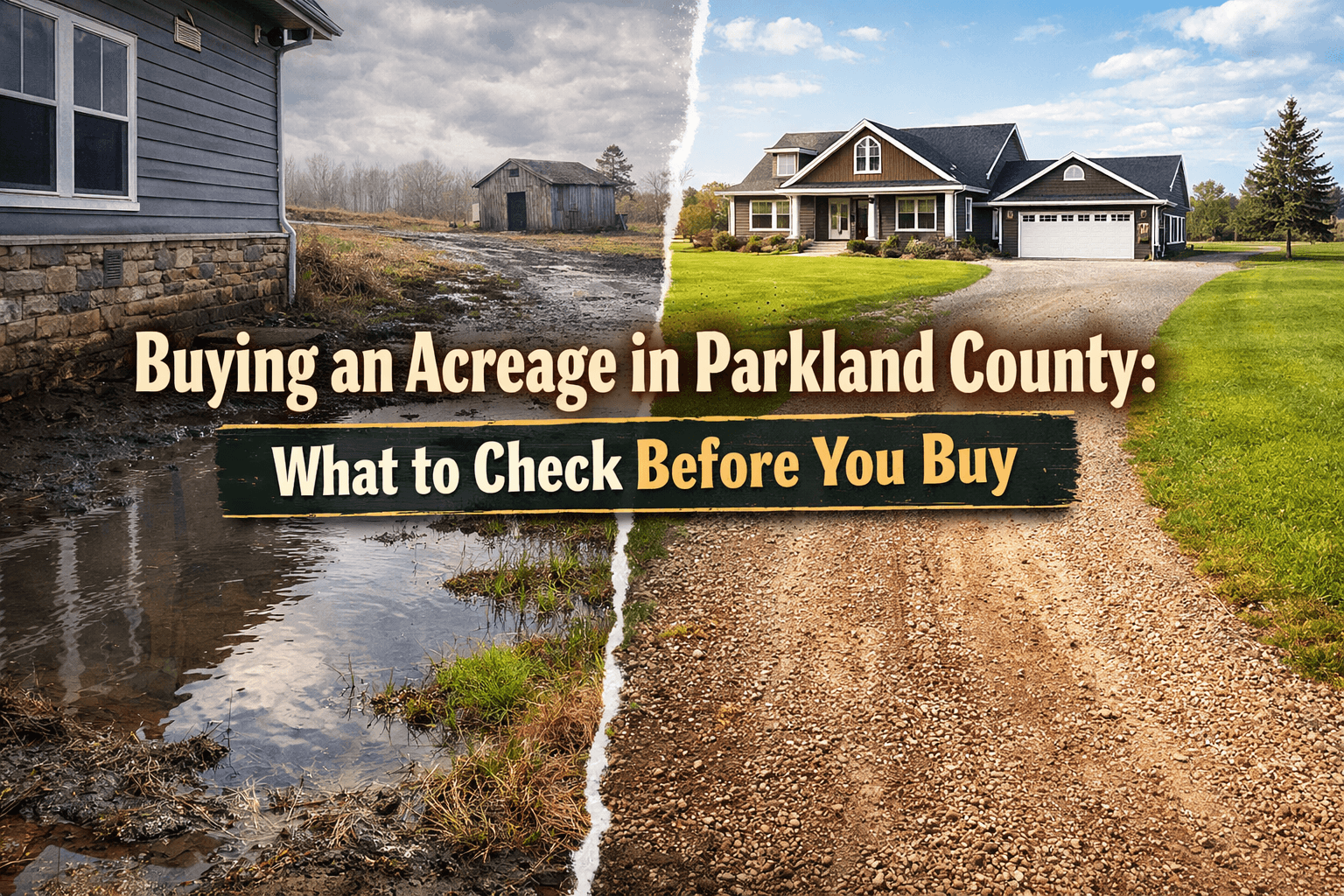
Buying an acreage in Parkland County involves more than just choosing the right house. This guide explains what to look for—like drainage, grading, and property layout—so you can avoid costly issues and make sure the land works properly long-term.
Buying an acreage in Parkland County involves more than just choosing the right house. This guide explains what to look for—like drainage, grading, and property layout—so you can avoid costly issues and make sure the land works properly long-term.
12 min read
Prairie Acre Developments
423-53303 RR 31 Parkland County, AB
Buying an acreage in Parkland County involves more than just choosing the right house. This guide explains what to look for—like drainage, grading, and property layout—so you can avoid costly issues and make sure the land works properly long-term.
12 min read
Introduction
If you’re planning to buy an acreage in Parkland County, one of the first things you’ll notice is that no two properties are the same. Some look dry and well laid out, while others feel a bit off as soon as you walk the land. For many acreage buyers, that’s where the uncertainty starts.
Throughout our work with acreage owners across Parkland County, we’ve seen that the biggest problems usually aren’t the house — it’s what’s happening with the land underneath. Drainage, grading, and layout issues are easy to miss during a showing, but they’re the things that cause the biggest headaches later.
An acreage purchase is built around more than what you see that day. The way water moves, how the land was graded, and how everything is positioned will determine whether the property works long-term — or constantly gives you problems.
This blog breaks down what to look for, what most buyers miss, and where things usually go wrong before you commit.
Most acreage problems don’t show up right away. We see this all the time on acreages.
They usually appear during spring melt or after a heavy rain — when water actually starts moving across the land.
Common things buyers notice include:
Water pooling near houses or garages
Soft or uneven ground in the yard
Driveways that feel muddy or unstable
Low areas where water sits for long periods
These are usually signs that the property wasn’t graded properly or drainage wasn’t planned correctly.
Water is the biggest factor affecting an acreage. If it’s not controlled, it starts working against everything on the property.
👉 What happens if ignored:
Small drainage issues turn into ongoing problems — wet yards, damaged driveways, and water working toward your foundation.
⚡ Most people don’t realize this — the problem isn’t the water, it’s where it’s going.
Most buyers focus on the house. That’s normal. But the layout of the land is what determines how the property actually works.
This is one of the most common issues we deal with.
A well-planned acreage considers:
Building locations
Drainage direction
Room for future development
Everything on the property needs to work together — not fight each other.
If buildings, septic, and drainage aren’t planned together, problems show up later when you try to use or expand the property.
👉 What happens if ignored:
You end up dealing with poor access, drainage conflicts, and expensive rework when adding shops, garages, or additions.
⚡ This is where things usually go wrong — the layout works on paper, but not in real life.
This is the biggest issue we see across almost every acreage.
Most properties we look at have at least one drainage problem.
Common problems include:
Water draining toward buildings
Driveways holding water
Low areas staying wet
Surface water affecting septic systems
The land isn’t directing water properly.
Everything depends on drainage — your house, your septic system, your driveway, and your yard.
👉 What happens if ignored:
You’ll deal with constant maintenance, faster wear on your driveway, and long-term moisture issues around your home.
⚡ Here’s what causes the issue later — the ground settles, and water starts moving in the wrong direction.
A property can look completely fine during a showing and still have problems.
We see this all the time.
A property may look dry, but still experience:
Water pooling during spring melt
Soft ground after rain
Driveway breakdown over time
Limited usability for future projects
You’re only seeing the property in one set of conditions — usually the best-case scenario.
The real test is how the property performs when water is moving.
👉 What happens if ignored:
You buy the property thinking everything is fine — then spend the next few years fixing problems you didn’t see coming.
This is where you can avoid most of these problems.
The first thing we’d look at is how water moves across the property — because that tells you everything.
From there, you want to understand:
Grading and drainage patterns
Septic system location and condition
Driveway structure and performance
How the property could be used in the future
You’re evaluating the land, not just the house.
A good property layout saves you money long-term and gives you flexibility.
👉 What happens if ignored:
You end up fixing grading, reworking drainage, or redesigning parts of the property after you’ve already bought it.
The first thing I’d do is simple — don’t just look at the property, watch it.
If you can, visit after rain or during spring melt.
Look for:
Where water collects
How it flows across the land
Soft or problem areas
How the driveway holds up
This gives you a much clearer picture of what you’re actually buying.
If you’re unsure, this is where getting a second look at the property layout, drainage, and grading can save you a lot of money.
Buying an acreage in Parkland County isn’t just about the house — it’s about how the land works.
Drainage, grading, layout, and access all play a major role in how the property performs over time.
When these are done right, the property works with you. When they’re not, you’ll be dealing with ongoing issues.
👉 Small problems become expensive if ignored
👉 Fixing things early — or catching them before you buy — saves you money and frustration long-term
Introduction
If you’re planning to buy an acreage in Parkland County, one of the first things you’ll notice is that no two properties are the same. Some look dry and well laid out, while others feel a bit off as soon as you walk the land. For many acreage buyers, that’s where the uncertainty starts.
Throughout our work with acreage owners across Parkland County, we’ve seen that the biggest problems usually aren’t the house — it’s what’s happening with the land underneath. Drainage, grading, and layout issues are easy to miss during a showing, but they’re the things that cause the biggest headaches later.
An acreage purchase is built around more than what you see that day. The way water moves, how the land was graded, and how everything is positioned will determine whether the property works long-term — or constantly gives you problems.
This blog breaks down what to look for, what most buyers miss, and where things usually go wrong before you commit.
Most acreage problems don’t show up right away. We see this all the time on acreages.
They usually appear during spring melt or after a heavy rain — when water actually starts moving across the land.
Common things buyers notice include:
Water pooling near houses or garages
Soft or uneven ground in the yard
Driveways that feel muddy or unstable
Low areas where water sits for long periods
These are usually signs that the property wasn’t graded properly or drainage wasn’t planned correctly.
Water is the biggest factor affecting an acreage. If it’s not controlled, it starts working against everything on the property.
👉 What happens if ignored:
Small drainage issues turn into ongoing problems — wet yards, damaged driveways, and water working toward your foundation.
⚡ Most people don’t realize this — the problem isn’t the water, it’s where it’s going.
Most buyers focus on the house. That’s normal. But the layout of the land is what determines how the property actually works.
This is one of the most common issues we deal with.
A well-planned acreage considers:
Building locations
Drainage direction
Room for future development
Everything on the property needs to work together — not fight each other.
If buildings, septic, and drainage aren’t planned together, problems show up later when you try to use or expand the property.
👉 What happens if ignored:
You end up dealing with poor access, drainage conflicts, and expensive rework when adding shops, garages, or additions.
⚡ This is where things usually go wrong — the layout works on paper, but not in real life.
This is the biggest issue we see across almost every acreage.
Most properties we look at have at least one drainage problem.
Common problems include:
Water draining toward buildings
Driveways holding water
Low areas staying wet
Surface water affecting septic systems
The land isn’t directing water properly.
Everything depends on drainage — your house, your septic system, your driveway, and your yard.
👉 What happens if ignored:
You’ll deal with constant maintenance, faster wear on your driveway, and long-term moisture issues around your home.
⚡ Here’s what causes the issue later — the ground settles, and water starts moving in the wrong direction.
A property can look completely fine during a showing and still have problems.
We see this all the time.
A property may look dry, but still experience:
Water pooling during spring melt
Soft ground after rain
Driveway breakdown over time
Limited usability for future projects
You’re only seeing the property in one set of conditions — usually the best-case scenario.
The real test is how the property performs when water is moving.
👉 What happens if ignored:
You buy the property thinking everything is fine — then spend the next few years fixing problems you didn’t see coming.
This is where you can avoid most of these problems.
The first thing we’d look at is how water moves across the property — because that tells you everything.
From there, you want to understand:
Grading and drainage patterns
Septic system location and condition
Driveway structure and performance
How the property could be used in the future
You’re evaluating the land, not just the house.
A good property layout saves you money long-term and gives you flexibility.
👉 What happens if ignored:
You end up fixing grading, reworking drainage, or redesigning parts of the property after you’ve already bought it.
The first thing I’d do is simple — don’t just look at the property, watch it.
If you can, visit after rain or during spring melt.
Look for:
Where water collects
How it flows across the land
Soft or problem areas
How the driveway holds up
This gives you a much clearer picture of what you’re actually buying.
If you’re unsure, this is where getting a second look at the property layout, drainage, and grading can save you a lot of money.
Buying an acreage in Parkland County isn’t just about the house — it’s about how the land works.
Drainage, grading, layout, and access all play a major role in how the property performs over time.
When these are done right, the property works with you. When they’re not, you’ll be dealing with ongoing issues.
👉 Small problems become expensive if ignored
👉 Fixing things early — or catching them before you buy — saves you money and frustration long-term