Common Grading Problems We Saw in 2025 (And How Skid Steer Services Fix Them)
9 min read
A breakdown of the most common grading issues we encountered in 2025 and how professional skid steer services can prevent drainage, settling, and long-term property damage.
A breakdown of the most common grading issues we encountered in 2025 and how professional skid steer services can prevent drainage, settling, and long-term property damage.
9 min read
Prairie Acre Developments
423-53303 RR 31 Parkland County, AB
In 2025, we worked on a wide range of acreage and rural projects across Parkland County — from driveway repairs and final grading to drainage fixes and site prep. One thing became very clear: most grading problems are preventable, but they keep showing up job after job.
Many of these issues stem from rushed work, poor planning, or grading done without proper equipment. This blog outlines the most common grading problems we encountered in 2025 and explains how professional skid steer services help correct them properly.
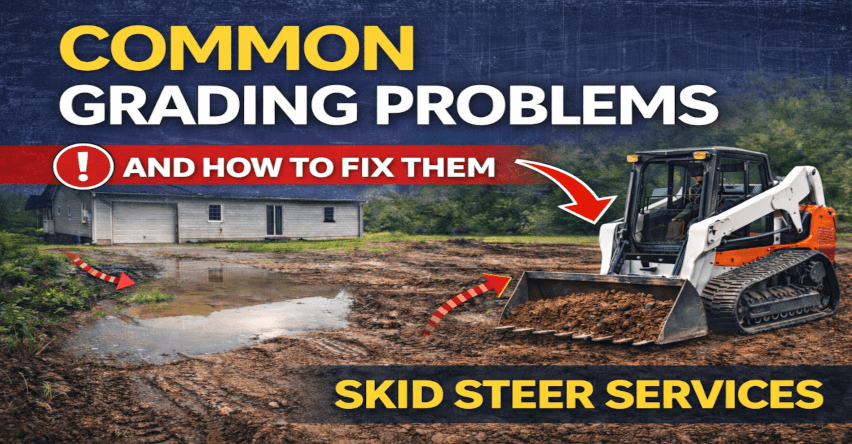
One of the most common grading issues we saw was improper slope around homes, garages, and shops.
Instead of directing water away from structures, the ground was flat — or worse, sloped inward. This leads to pooling water, foundation moisture, ice buildup in winter, and long-term structural issues.
How skid steer services help:
A skid steer allows for precise grading and reshaping of slopes around buildings, ensuring water moves away as intended without disturbing surrounding areas.
Driveway problems were everywhere in 2025. We regularly saw gravel driveways with soft spots, standing water, or deep ruts caused by poor base preparation.
In most cases, the issue wasn’t the gravel — it was the lack of proper grading, compaction, or geotextile fabric underneath.
How skid steer services help:
Skid steers are ideal for regrading driveways, removing unsuitable material, installing proper base layers, and shaping crowns or drainage paths that prevent future damage.
Many properties had “final grading” that was clearly done by eye, without considering drainage patterns or future use of the land.
This often resulted in uneven surfaces, low spots that collect water, and areas that settle over time.
How skid steer services help:
Professional skid steer operators can fine-grade surfaces accurately, blending grades smoothly and correcting low spots while maintaining proper drainage across the site.
In many cases, these grading issues could have been avoided with proper rough and final grading planned from the start.
Another recurring issue was a lack of coordination between yard grading, driveways, and roadside ditches.
Water would move off one area only to get trapped in another, causing flooding, erosion, or ice buildup in winter.
How skid steer services help:
Skid steer services allow for controlled shaping of swales, shallow ditches, and transitions between surfaces so water flows consistently across the property instead of pooling.
In some cases, grading wasn’t the issue — over-compaction was. We saw areas where soil or gravel had been packed so tightly that water couldn’t penetrate, leading to surface runoff and pooling.
How skid steer services help:
Skid steers allow operators to remove and replace problem material, reshape surfaces, and restore proper drainage characteristics without overworking the soil.
Another common issue was grading that didn’t account for future buildings, landscaping, or access.
This often led to rework when owners decided to add a garage, shop, or driveway later.
How skid steer services help:
Skid steer services are ideal for staged grading — preparing sites with future development in mind so work doesn’t need to be redone.
Most grading problems we saw in 2025 came down to:
Work done without proper equipment
No drainage plan
Rushed jobs
Grading performed without understanding how water moves
These issues usually don’t show up immediately — but when they do, they’re expensive to fix.
Skid steer services are one of the most effective tools for correcting grading issues on acreages.
With the right operator, skid steers offer:
Precision grading
Minimal disturbance to surrounding areas
Efficient material movement
Accurate shaping for drainage and access
When used properly, skid steer services solve problems permanently — not temporarily.
Looking back at our 2025 jobs, the same grading problems showed up again and again — and almost all of them could have been avoided with proper planning and professional skid steer work.
If you’re dealing with drainage issues, driveway problems, or uneven ground on your acreage, addressing them early with experienced skid steer services can save significant time and money.
Proper grading isn’t just about how your property looks — it’s about how it functions long-term. That’s why many projects start with planning and design before any grading or skid steer work begins.
In 2025, we worked on a wide range of acreage and rural projects across Parkland County — from driveway repairs and final grading to drainage fixes and site prep. One thing became very clear: most grading problems are preventable, but they keep showing up job after job.
Many of these issues stem from rushed work, poor planning, or grading done without proper equipment. This blog outlines the most common grading problems we encountered in 2025 and explains how professional skid steer services help correct them properly.
One of the most common grading issues we saw was improper slope around homes, garages, and shops.
Instead of directing water away from structures, the ground was flat — or worse, sloped inward. This leads to pooling water, foundation moisture, ice buildup in winter, and long-term structural issues.
How skid steer services help:
A skid steer allows for precise grading and reshaping of slopes around buildings, ensuring water moves away as intended without disturbing surrounding areas.
Driveway problems were everywhere in 2025. We regularly saw gravel driveways with soft spots, standing water, or deep ruts caused by poor base preparation.
In most cases, the issue wasn’t the gravel — it was the lack of proper grading, compaction, or geotextile fabric underneath.
How skid steer services help:
Skid steers are ideal for regrading driveways, removing unsuitable material, installing proper base layers, and shaping crowns or drainage paths that prevent future damage.
Many properties had “final grading” that was clearly done by eye, without considering drainage patterns or future use of the land.
This often resulted in uneven surfaces, low spots that collect water, and areas that settle over time.
How skid steer services help:
Professional skid steer operators can fine-grade surfaces accurately, blending grades smoothly and correcting low spots while maintaining proper drainage across the site.
In many cases, these grading issues could have been avoided with proper rough and final grading planned from the start.
Another recurring issue was a lack of coordination between yard grading, driveways, and roadside ditches.
Water would move off one area only to get trapped in another, causing flooding, erosion, or ice buildup in winter.
How skid steer services help:
Skid steer services allow for controlled shaping of swales, shallow ditches, and transitions between surfaces so water flows consistently across the property instead of pooling.
In some cases, grading wasn’t the issue — over-compaction was. We saw areas where soil or gravel had been packed so tightly that water couldn’t penetrate, leading to surface runoff and pooling.
How skid steer services help:
Skid steers allow operators to remove and replace problem material, reshape surfaces, and restore proper drainage characteristics without overworking the soil.
Another common issue was grading that didn’t account for future buildings, landscaping, or access.
This often led to rework when owners decided to add a garage, shop, or driveway later.
How skid steer services help:
Skid steer services are ideal for staged grading — preparing sites with future development in mind so work doesn’t need to be redone.
Most grading problems we saw in 2025 came down to:
Work done without proper equipment
No drainage plan
Rushed jobs
Grading performed without understanding how water moves
These issues usually don’t show up immediately — but when they do, they’re expensive to fix.
Skid steer services are one of the most effective tools for correcting grading issues on acreages.
With the right operator, skid steers offer:
Precision grading
Minimal disturbance to surrounding areas
Efficient material movement
Accurate shaping for drainage and access
When used properly, skid steer services solve problems permanently — not temporarily.
Looking back at our 2025 jobs, the same grading problems showed up again and again — and almost all of them could have been avoided with proper planning and professional skid steer work.
If you’re dealing with drainage issues, driveway problems, or uneven ground on your acreage, addressing them early with experienced skid steer services can save significant time and money.
Proper grading isn’t just about how your property looks — it’s about how it functions long-term. That’s why many projects start with planning and design before any grading or skid steer work begins.