What Is a Grading Permit in Parkland County? Drainage & Lot Grading Explained
10 min read
Planning grading work in Parkland County? Learn when a grading permit or lot grading plan is required, how drainage rules apply, and how to avoid costly mistakes before you build.
Planning grading work in Parkland County? Learn when a grading permit or lot grading plan is required, how drainage rules apply, and how to avoid costly mistakes before you build.
10 min read
Prairie Acre Developments
423-53303 RR 31 Parkland County, AB
If you’re planning grading work, drainage changes, a new garage, shop, or home build on an acreage in Parkland County, one of the first questions that comes up is whether you need a grading permit.
For many acreage owners, that’s where confusion starts.
In Parkland County, grading is regulated under the Surface Drainage and Lot Grading Bylaw. In many cases, grading approval is required as part of a Development Permit — especially when changing elevations, altering drainage patterns, or affecting neighbouring properties.
The biggest mistake we see isn’t skipping the permit. It’s submitting a plan without properly thinking through how grading will affect long-term drainage, access, and future development.
This blog explains how grading approval works in Parkland County, when you may need it, and why proper acreage planning matters before you apply.
In Parkland County, grading is typically reviewed through the Development Permit process.
You may need grading approval if you are:
Changing existing drainage patterns
Raising or lowering yard elevations
Bringing in or removing significant fill
Building a garage, shop, or new home
Modifying driveway elevations or approaches
The county reviews drawings that show how the proposed grading will impact:
Surface drainage
Adjacent properties
Municipal ditches or stormwater systems
Setbacks and land use rules
This review is often based on a Site Plan and may require a Lot Grading Plan depending on the scope of work.
A grading plan is more than just a drawing.
It typically includes:
Existing elevations
Proposed finished elevations
Direction of water flow
Building locations
Driveway elevations
Septic and well locations
Drainage swales or ditches
This is what Parkland County uses to determine whether your project complies with the Surface Drainage and Lot Grading Bylaw.
From a homeowner’s perspective, this plan answers much bigger questions:
Is water going to move away from my building?
Will this cause problems for my neighbour?
Will I need to rework this later if I add another shop?
A grading permit isn’t just about approval — it’s about preventing future problems.
Parkland County regulates grading under its Surface Drainage and Lot Grading Bylaw.
The goal of this bylaw is to:
Prevent flooding
Protect neighbouring properties
Maintain proper drainage flow
Avoid erosion and standing water
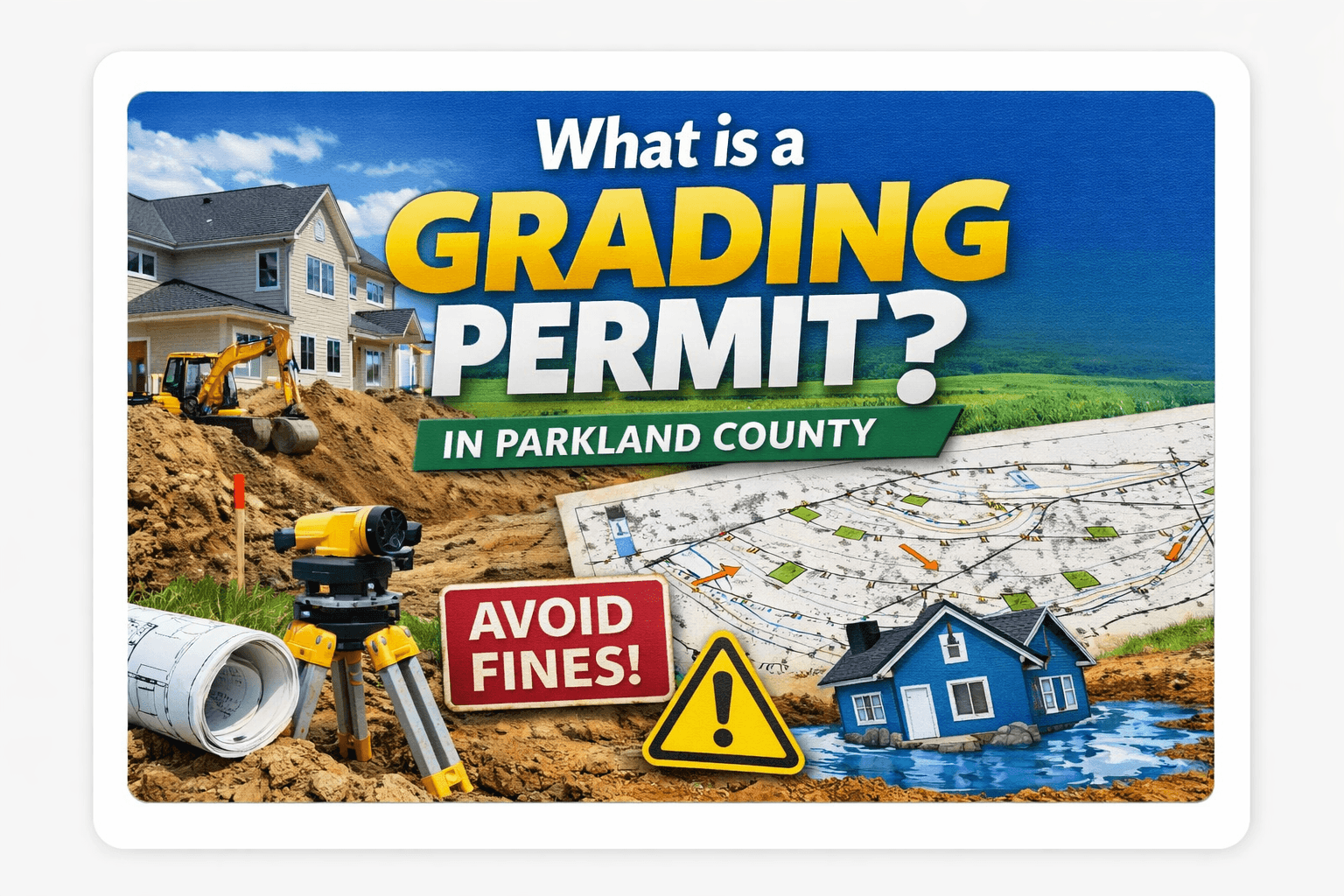
Altering grade without approval can result in:
Stop work orders
Compliance orders
Fines
Required restoration work
Many acreage owners assume minor grading changes don’t matter — but even small elevation changes can redirect water onto adjacent properties.
This is why early planning matters.
Proper drainage design is a core part of professional grading and site preparation.
Permit approval means the plan meets minimum requirements.
It does not guarantee the layout is optimal long-term.
We regularly see properties where:
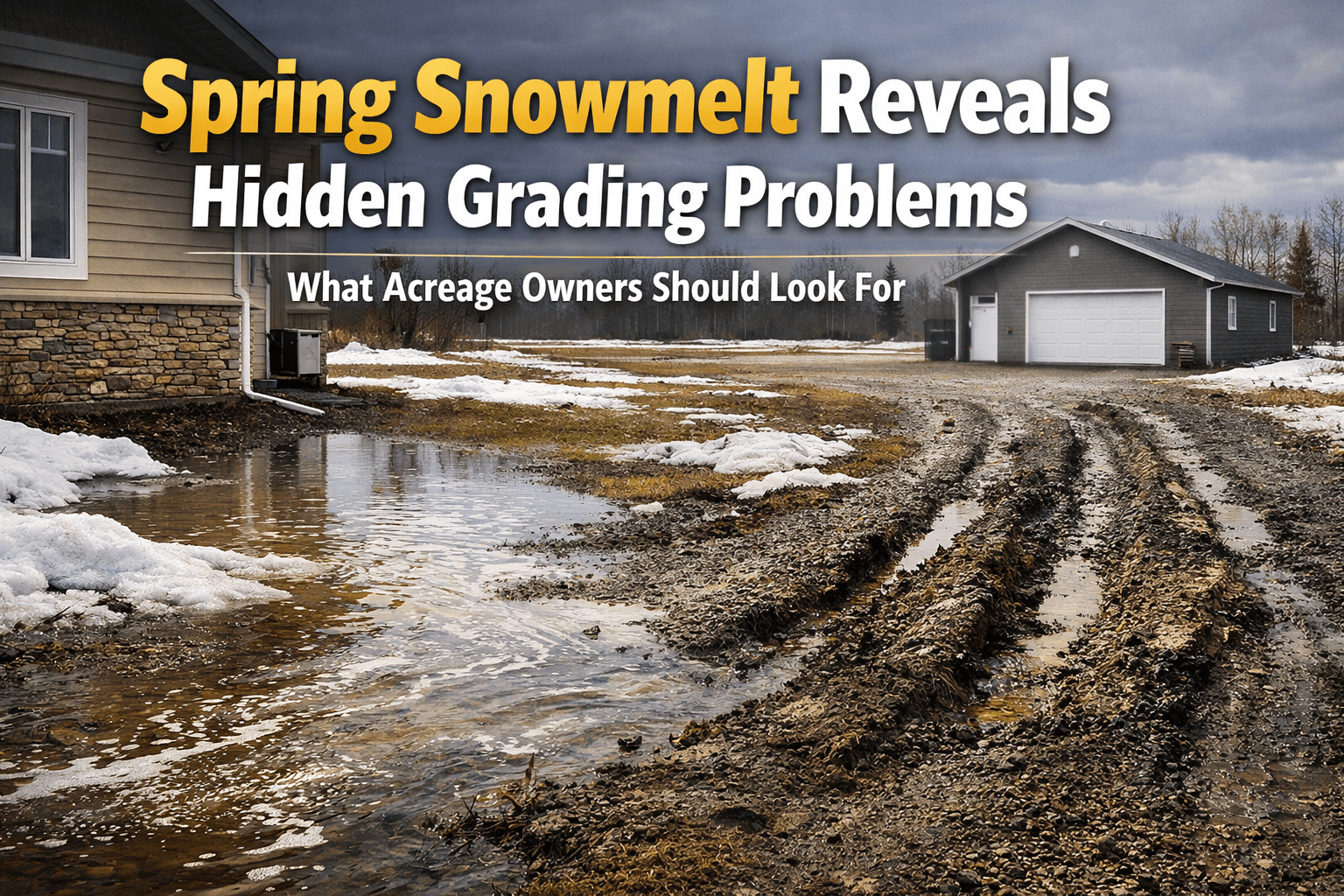
Water pools near garages
Driveways hold water in spring
Shops were placed in low areas
Future additions become complicated
These problems usually trace back to early grading decisions.
A well-designed site plan considers:
Natural slope of the land
Seasonal runoff
Equipment access
Future building expansion
Grading should support your long-term acreage vision — not just satisfy permit review.
Before submitting grading plans to Parkland County, we help acreage owners:
Evaluate existing elevations
Plan finished grade properly
Design logical drainage paths
Place buildings efficiently
Ensure room for future development
Create clear, accurate site plans
The goal is simple:
Submit a grading plan that works long-term — not just one that gets approved.
If you're planning grading work, a new shop, garage pad, driveway change, or new home build in Parkland County, the planning stage is the most important part of the process.
Starting with a clear, well-thought-out plan helps ensure:
Better long-term use of your land
Fewer permit revisions
Fewer surprises during construction
A property layout that works now and in the future
Many acreage owners start by learning more about acreage planning services before submitting a permit application.
A grading permit in Parkland County isn’t just paperwork — it’s about how water moves across your property and how your acreage functions long-term.
The county reviews grading to protect drainage systems and neighbouring land. But the real value of proper grading planning is preventing costly problems down the road.
If you’re planning grading or development work on your acreage in Parkland County, starting with the right plan is the best investment you can make in your property.
If you’re planning grading work, drainage changes, a new garage, shop, or home build on an acreage in Parkland County, one of the first questions that comes up is whether you need a grading permit.
For many acreage owners, that’s where confusion starts.
In Parkland County, grading is regulated under the Surface Drainage and Lot Grading Bylaw. In many cases, grading approval is required as part of a Development Permit — especially when changing elevations, altering drainage patterns, or affecting neighbouring properties.
The biggest mistake we see isn’t skipping the permit. It’s submitting a plan without properly thinking through how grading will affect long-term drainage, access, and future development.
This blog explains how grading approval works in Parkland County, when you may need it, and why proper acreage planning matters before you apply.
In Parkland County, grading is typically reviewed through the Development Permit process.
You may need grading approval if you are:
Changing existing drainage patterns
Raising or lowering yard elevations
Bringing in or removing significant fill
Building a garage, shop, or new home
Modifying driveway elevations or approaches
The county reviews drawings that show how the proposed grading will impact:
Surface drainage
Adjacent properties
Municipal ditches or stormwater systems
Setbacks and land use rules
This review is often based on a Site Plan and may require a Lot Grading Plan depending on the scope of work.
A grading plan is more than just a drawing.
It typically includes:
Existing elevations
Proposed finished elevations
Direction of water flow
Building locations
Driveway elevations
Septic and well locations
Drainage swales or ditches
This is what Parkland County uses to determine whether your project complies with the Surface Drainage and Lot Grading Bylaw.
From a homeowner’s perspective, this plan answers much bigger questions:
Is water going to move away from my building?
Will this cause problems for my neighbour?
Will I need to rework this later if I add another shop?
A grading permit isn’t just about approval — it’s about preventing future problems.
Parkland County regulates grading under its Surface Drainage and Lot Grading Bylaw.
The goal of this bylaw is to:
Prevent flooding
Protect neighbouring properties
Maintain proper drainage flow
Avoid erosion and standing water
Altering grade without approval can result in:
Stop work orders
Compliance orders
Fines
Required restoration work
Many acreage owners assume minor grading changes don’t matter — but even small elevation changes can redirect water onto adjacent properties.
This is why early planning matters.
Proper drainage design is a core part of professional grading and site preparation.
Permit approval means the plan meets minimum requirements.
It does not guarantee the layout is optimal long-term.
We regularly see properties where:
Water pools near garages
Driveways hold water in spring
Shops were placed in low areas
Future additions become complicated
These problems usually trace back to early grading decisions.
A well-designed site plan considers:
Natural slope of the land
Seasonal runoff
Equipment access
Future building expansion
Grading should support your long-term acreage vision — not just satisfy permit review.
Before submitting grading plans to Parkland County, we help acreage owners:
Evaluate existing elevations
Plan finished grade properly
Design logical drainage paths
Place buildings efficiently
Ensure room for future development
Create clear, accurate site plans
The goal is simple:
Submit a grading plan that works long-term — not just one that gets approved.
If you're planning grading work, a new shop, garage pad, driveway change, or new home build in Parkland County, the planning stage is the most important part of the process.
Starting with a clear, well-thought-out plan helps ensure:
Better long-term use of your land
Fewer permit revisions
Fewer surprises during construction
A property layout that works now and in the future
Many acreage owners start by learning more about acreage planning services before submitting a permit application.
A grading permit in Parkland County isn’t just paperwork — it’s about how water moves across your property and how your acreage functions long-term.
The county reviews grading to protect drainage systems and neighbouring land. But the real value of proper grading planning is preventing costly problems down the road.
If you’re planning grading or development work on your acreage in Parkland County, starting with the right plan is the best investment you can make in your property.