How to Build a Gravel Driveway: A Step-by-Step Guide
8 min read
A practical step-by-step guide to building a durable gravel driveway, including excavation, geotextile fabric, gravel sizing, and proper compaction.
A practical step-by-step guide to building a durable gravel driveway, including excavation, geotextile fabric, gravel sizing, and proper compaction.
8 min read
Prairie Acre Developments
423-53303 RR 31 Parkland County, AB
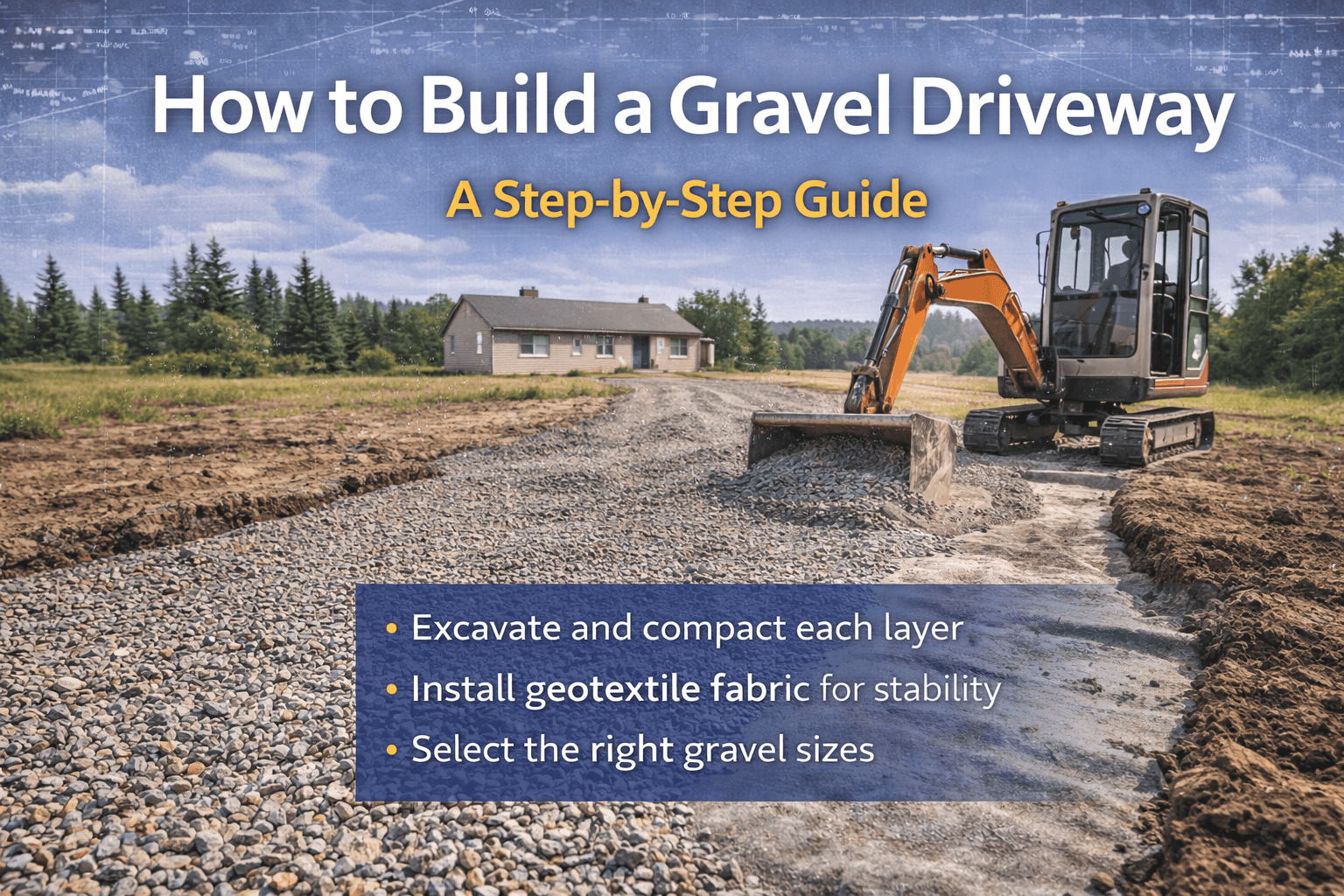
Building a gravel driveway is a practical and cost-effective way to create a durable access route for vehicles on an acreage. When done properly, a gravel driveway can handle heavy use, shed water effectively, and last for years with minimal maintenance.
This guide walks through the full process — from excavation and geotextile installation to gravel selection and compaction — and explains when larger gravel sizes are necessary for added stability. Many of these steps are commonly completed using skid steer services on acreage properties.
Start by evaluating drainage patterns and the firmness of the existing soil. Water movement, slope, and subgrade strength all play a role in how well a driveway performs long term.
If the subgrade is firm and well-drained, a single layer of 20 mm (¾") gravel may be sufficient.
If the soil is soft, wet, or prone to movement, over-excavation and additional gravel layers will be required to create a stable base.
Proper assessment at this stage often prevents the need for future repairs and regrading.
Mark the driveway layout clearly before excavation begins.
Mark driveway boundaries using stakes and string
Ensure sufficient width for vehicle access
Excavate approximately 8–12 inches (20–30 cm)
Dig deeper if soft or unstable soil is encountered
Proper excavation is critical to prevent future rutting and settling and is commonly handled as part of rough and final grading on acreage properties.
Geotextile fabric is strongly recommended, especially on clay or soft soils.
Lay fabric across the full excavation area
Overlap seams by at least 12 inches (30 cm)
Benefits of geotextile fabric include:
Prevents gravel from mixing with the subgrade
Improves drainage
Extends driveway lifespan
Reduces future maintenance
This step is often skipped on rushed jobs, but it plays a major role in long-term driveway performance.
Gravel selection depends on soil conditions and expected traffic.
50+ mm (2"+) gravel — used for very soft or unstable subgrades
40 mm (1½") gravel — intermediate structural layer
20 mm (¾") gravel — finished driving surface
The 40 mm and 50+ mm layers are optional and only required where subgrade conditions demand additional support. These layers are typically placed and shaped using skid steer services to maintain consistent depth and grade.
Compaction is critical for long-term driveway performance.
Plate tamper for small driveways
Ride-on roller for larger areas
Compact each layer before adding the next
Proper compaction prevents washouts, ruts, and premature failure — especially during spring thaw and wet conditions.
Spread 3–4 inches (7–10 cm) of 20 mm crushed gravel
Compact thoroughly
Ensure an even surface with proper drainage slope
Final shaping and crowning help direct water away from the driveway surface and prevent pooling.
Rake to smooth high and low spots
Drive over the surface to test firmness
Add and compact additional gravel where needed
At this stage, the driveway should feel solid under vehicle traffic with no visible movement or soft spots.
A well-built gravel driveway starts with proper planning, excavation, material selection, and compaction. While some sites only require a 20 mm top layer, softer soils benefit from larger base materials and geotextile fabric.
Many driveway failures come from skipping early planning steps. That’s why proper planning and design before excavation begins helps ensure long-term performance.
Following these steps results in a durable, low-maintenance gravel driveway that stands up to Alberta conditions and regular vehicle use.
Building a gravel driveway is a practical and cost-effective way to create a durable access route for vehicles on an acreage. When done properly, a gravel driveway can handle heavy use, shed water effectively, and last for years with minimal maintenance.
This guide walks through the full process — from excavation and geotextile installation to gravel selection and compaction — and explains when larger gravel sizes are necessary for added stability. Many of these steps are commonly completed using skid steer services on acreage properties.
Start by evaluating drainage patterns and the firmness of the existing soil. Water movement, slope, and subgrade strength all play a role in how well a driveway performs long term.
If the subgrade is firm and well-drained, a single layer of 20 mm (¾") gravel may be sufficient.
If the soil is soft, wet, or prone to movement, over-excavation and additional gravel layers will be required to create a stable base.
Proper assessment at this stage often prevents the need for future repairs and regrading.
Mark the driveway layout clearly before excavation begins.
Mark driveway boundaries using stakes and string
Ensure sufficient width for vehicle access
Excavate approximately 8–12 inches (20–30 cm)
Dig deeper if soft or unstable soil is encountered
Proper excavation is critical to prevent future rutting and settling and is commonly handled as part of rough and final grading on acreage properties.
Geotextile fabric is strongly recommended, especially on clay or soft soils.
Lay fabric across the full excavation area
Overlap seams by at least 12 inches (30 cm)
Benefits of geotextile fabric include:
Prevents gravel from mixing with the subgrade
Improves drainage
Extends driveway lifespan
Reduces future maintenance
This step is often skipped on rushed jobs, but it plays a major role in long-term driveway performance.
Gravel selection depends on soil conditions and expected traffic.
50+ mm (2"+) gravel — used for very soft or unstable subgrades
40 mm (1½") gravel — intermediate structural layer
20 mm (¾") gravel — finished driving surface
The 40 mm and 50+ mm layers are optional and only required where subgrade conditions demand additional support. These layers are typically placed and shaped using skid steer services to maintain consistent depth and grade.
Compaction is critical for long-term driveway performance.
Plate tamper for small driveways
Ride-on roller for larger areas
Compact each layer before adding the next
Proper compaction prevents washouts, ruts, and premature failure — especially during spring thaw and wet conditions.
Spread 3–4 inches (7–10 cm) of 20 mm crushed gravel
Compact thoroughly
Ensure an even surface with proper drainage slope
Final shaping and crowning help direct water away from the driveway surface and prevent pooling.
Rake to smooth high and low spots
Drive over the surface to test firmness
Add and compact additional gravel where needed
At this stage, the driveway should feel solid under vehicle traffic with no visible movement or soft spots.
A well-built gravel driveway starts with proper planning, excavation, material selection, and compaction. While some sites only require a 20 mm top layer, softer soils benefit from larger base materials and geotextile fabric.
Many driveway failures come from skipping early planning steps. That’s why proper planning and design before excavation begins helps ensure long-term performance.
Following these steps results in a durable, low-maintenance gravel driveway that stands up to Alberta conditions and regular vehicle use.