A Homeowner’s Guide to Septic Fields in Alberta: What to Expect and How Prairie Acre Developments Can Help
13 min read
A simple guide to septic fields in Alberta — how they work, what a typical system looks like, what to expect during installation, and how Prairie Acre Developments helps acreage owners in Parkland County.
A simple guide to septic fields in Alberta — how they work, what a typical system looks like, what to expect during installation, and how Prairie Acre Developments helps acreage owners in Parkland County.
13 min read
Prairie Acre Developments
423-53303 RR 31 Parkland County, AB
A simple guide to septic fields in Alberta — how they work, what a typical system looks like, what to expect during installation, and how Prairie Acre Developments helps acreage owners in Parkland County.
13 min read
If you live on an acreage in Alberta, there’s a good chance your home relies on a septic system. Unlike city properties that connect to municipal sewer, rural homes need a properly designed septic field to manage wastewater safely and reliably.
Most septic problems don’t come from “bad luck.” They come from poor planning, incorrect installation, or systems that weren’t designed for the property’s soil and groundwater conditions.
At Prairie Acre Developments, we specialize in septic system installation in Parkland County and surrounding areas, helping acreage owners build systems that are installed correctly, meet code, and last long-term.
A septic field (also called a treatment field or dispersal field) is where wastewater is treated and dispersed into the soil after leaving your septic tank.
The septic tank holds solids and separates waste. The septic field handles the effluent (liquid), allowing it to spread out and filter through soil.
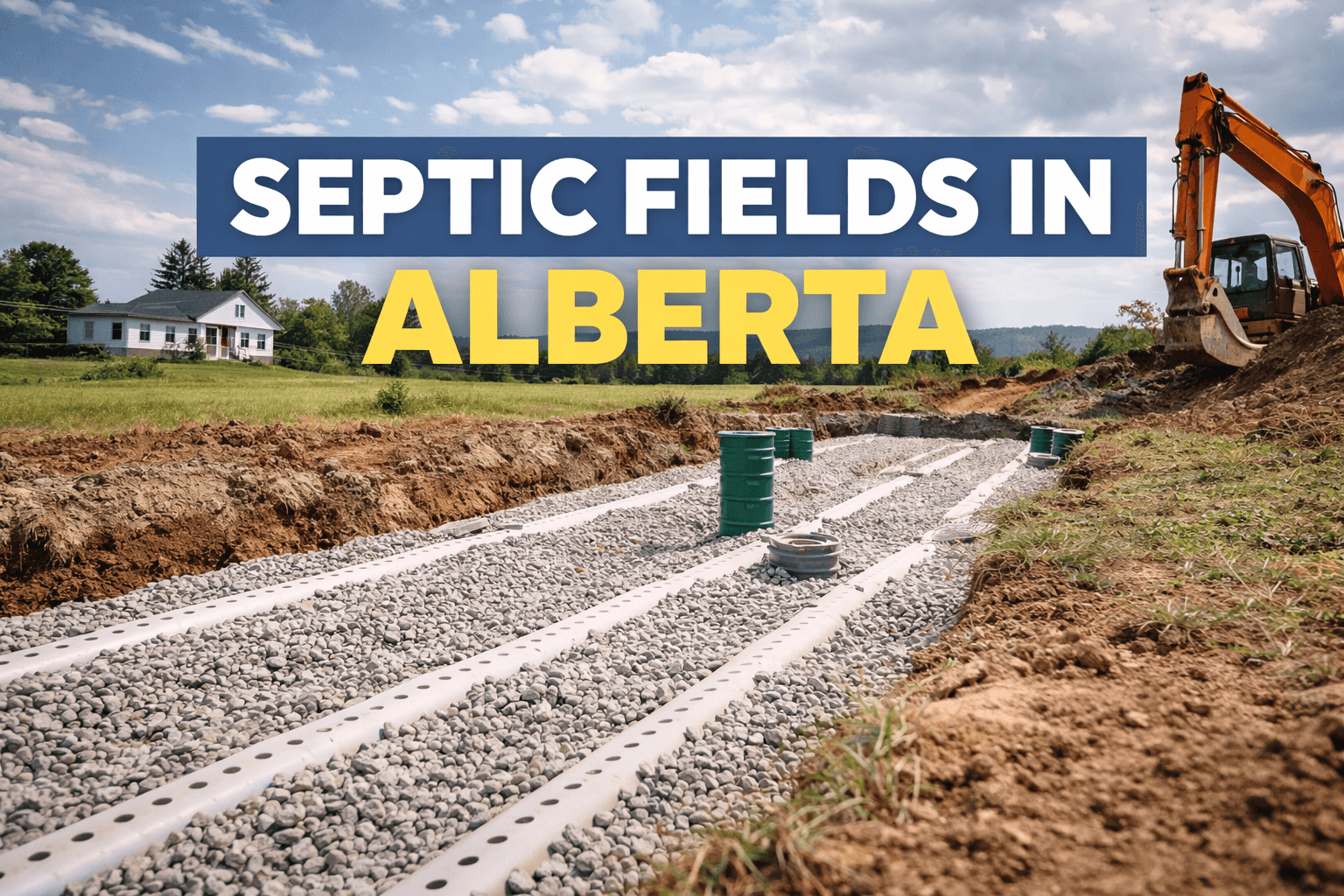
A typical septic field includes:
a network of trenches
perforated pipes or chambers
gravel or approved media
soil cover above the system
The goal is safe treatment and absorption — not just disposal.
Septic systems in Alberta must be designed to work with cold weather and varying soil conditions. A “standard” septic field on an acreage often includes a few key components.
Common features include:
lateral trenches designed to distribute wastewater evenly
level installation so the field performs consistently
proper separation from restrictive layers like bedrock or saturated soil
adequate cover to reduce freezing risk in winter
system sizing based on the home’s usage, not just the property size
Every property is different. The soil and water conditions determine what type of system is possible, and what design will work best long-term.
Most septic installations follow a clear sequence. The biggest difference between a smooth project and a stressful one usually comes down to planning and experience.
Here’s what homeowners should expect during a typical septic system installation in Alberta.
The first step is making sure the land can support the system.
This usually involves:
reviewing the property layout
evaluating slopes and drainage patterns
digging test pits
checking soil type and infiltration potential
confirming groundwater and restrictive layers
This step prevents expensive mistakes like installing a system in the wrong soil or too close to problem areas.
Once the site conditions are confirmed, the septic system needs to be designed to meet Alberta standards and match the property.
A proper design considers:
household size and usage
soil conditions and seasonal moisture
field placement and future site plans
access for maintenance and pumping
long-term reliability
Permits are typically required before installation begins. This ensures the work is inspected and compliant.
Once the design is finalized, installation is where precision matters.
This stage typically includes:
trench excavation to design depth
installation of laterals or chambers
gravel/media placement (if required)
careful backfilling and shaping
protecting the field from compaction
A septic field is not the place to rush. Clean workmanship here directly affects performance and lifespan.
Before the project is completed, the system must be confirmed to be functioning properly.
This includes verifying:
correct elevations and flow direction
proper trench installation and spacing
clean finishes and usable final grading
inspection requirements are met
Once approved, the system is ready to operate — and it should be reliable for many years if maintained.
A septic system isn’t “set it and forget it.” Regular maintenance is what prevents backups and early system failure.
Good septic habits include:
pumping your septic tank on schedule
keeping heavy equipment off the field
avoiding excessive water usage spikes
watching for signs of drainage issues
keeping surface water directed away from the field
A properly installed field can last a long time, but it still needs basic care.
Here are some of the most common questions acreage owners ask.
A well-designed and maintained septic field can often last 20 to 30 years, depending on soil, usage, and maintenance.
No — this is one of the fastest ways to damage a septic system.
Driving or parking on a septic field can:
crush pipes or chambers
compact soil
reduce oxygen in the treatment zone
shorten system life dramatically
In Alberta, freezing can happen — especially if the system was installed too shallow, overloaded, or if winter conditions remove insulating cover.
Signs can include:
slow drains
gurgling plumbing
sewage backups
Proper design, placement, and installation are the best prevention.
Common signs of septic field problems include:
sewage backups in the home
persistent slow drains
foul smells outdoors
standing water near the field
overly lush or bright green grass in one area
If you notice these signs, it’s worth getting it assessed early before it gets worse.
Septic is one of those projects where doing it right matters more than doing it fast.
Prairie Acre Developments helps acreage owners with:
septic system installation in Parkland County
practical site layout planning
clean excavation and installation
reliable systems designed for Alberta conditions
clear communication and straightforward guidance
We focus on quality workmanship, proper planning, and systems that perform long-term.
Septic system installation isn’t just about digging trenches and laying pipe. It’s about protecting your home, your investment, and your property long-term.
If you’re building a new home, replacing an old system, or planning a project on your acreage, getting septic done correctly is one of the most important steps.
If you want help planning or installing a septic field in Parkland County, reach out anytime. Prairie Acre Developments is here to help.
If you live on an acreage in Alberta, there’s a good chance your home relies on a septic system. Unlike city properties that connect to municipal sewer, rural homes need a properly designed septic field to manage wastewater safely and reliably.
Most septic problems don’t come from “bad luck.” They come from poor planning, incorrect installation, or systems that weren’t designed for the property’s soil and groundwater conditions.
At Prairie Acre Developments, we specialize in septic system installation in Parkland County and surrounding areas, helping acreage owners build systems that are installed correctly, meet code, and last long-term.
A septic field (also called a treatment field or dispersal field) is where wastewater is treated and dispersed into the soil after leaving your septic tank.
The septic tank holds solids and separates waste. The septic field handles the effluent (liquid), allowing it to spread out and filter through soil.
A typical septic field includes:
a network of trenches
perforated pipes or chambers
gravel or approved media
soil cover above the system
The goal is safe treatment and absorption — not just disposal.
Septic systems in Alberta must be designed to work with cold weather and varying soil conditions. A “standard” septic field on an acreage often includes a few key components.
Common features include:
lateral trenches designed to distribute wastewater evenly
level installation so the field performs consistently
proper separation from restrictive layers like bedrock or saturated soil
adequate cover to reduce freezing risk in winter
system sizing based on the home’s usage, not just the property size
Every property is different. The soil and water conditions determine what type of system is possible, and what design will work best long-term.
Most septic installations follow a clear sequence. The biggest difference between a smooth project and a stressful one usually comes down to planning and experience.
Here’s what homeowners should expect during a typical septic system installation in Alberta.
The first step is making sure the land can support the system.
This usually involves:
reviewing the property layout
evaluating slopes and drainage patterns
digging test pits
checking soil type and infiltration potential
confirming groundwater and restrictive layers
This step prevents expensive mistakes like installing a system in the wrong soil or too close to problem areas.
Once the site conditions are confirmed, the septic system needs to be designed to meet Alberta standards and match the property.
A proper design considers:
household size and usage
soil conditions and seasonal moisture
field placement and future site plans
access for maintenance and pumping
long-term reliability
Permits are typically required before installation begins. This ensures the work is inspected and compliant.
Once the design is finalized, installation is where precision matters.
This stage typically includes:
trench excavation to design depth
installation of laterals or chambers
gravel/media placement (if required)
careful backfilling and shaping
protecting the field from compaction
A septic field is not the place to rush. Clean workmanship here directly affects performance and lifespan.
Before the project is completed, the system must be confirmed to be functioning properly.
This includes verifying:
correct elevations and flow direction
proper trench installation and spacing
clean finishes and usable final grading
inspection requirements are met
Once approved, the system is ready to operate — and it should be reliable for many years if maintained.
A septic system isn’t “set it and forget it.” Regular maintenance is what prevents backups and early system failure.
Good septic habits include:
pumping your septic tank on schedule
keeping heavy equipment off the field
avoiding excessive water usage spikes
watching for signs of drainage issues
keeping surface water directed away from the field
A properly installed field can last a long time, but it still needs basic care.
Here are some of the most common questions acreage owners ask.
A well-designed and maintained septic field can often last 20 to 30 years, depending on soil, usage, and maintenance.
No — this is one of the fastest ways to damage a septic system.
Driving or parking on a septic field can:
crush pipes or chambers
compact soil
reduce oxygen in the treatment zone
shorten system life dramatically
In Alberta, freezing can happen — especially if the system was installed too shallow, overloaded, or if winter conditions remove insulating cover.
Signs can include:
slow drains
gurgling plumbing
sewage backups
Proper design, placement, and installation are the best prevention.
Common signs of septic field problems include:
sewage backups in the home
persistent slow drains
foul smells outdoors
standing water near the field
overly lush or bright green grass in one area
If you notice these signs, it’s worth getting it assessed early before it gets worse.
Septic is one of those projects where doing it right matters more than doing it fast.
Prairie Acre Developments helps acreage owners with:
septic system installation in Parkland County
practical site layout planning
clean excavation and installation
reliable systems designed for Alberta conditions
clear communication and straightforward guidance
We focus on quality workmanship, proper planning, and systems that perform long-term.
Septic system installation isn’t just about digging trenches and laying pipe. It’s about protecting your home, your investment, and your property long-term.
If you’re building a new home, replacing an old system, or planning a project on your acreage, getting septic done correctly is one of the most important steps.
If you want help planning or installing a septic field in Parkland County, reach out anytime. Prairie Acre Developments is here to help.