Spring Snowmelt Reveals Acreage Grading Issues in Parkland County
20 min read
Spring snowmelt is one of the best times to identify acreage grading issues. Learn what Parkland County acreage owners should look for around homes, garages, driveways, and septic systems to catch drainage problems early and prevent costly damage.
Spring snowmelt is one of the best times to identify acreage grading issues. Learn what Parkland County acreage owners should look for around homes, garages, driveways, and septic systems to catch drainage problems early and prevent costly damage.
20 min read
Prairie Acre Developments
423-53303 RR 31 Parkland County, AB
Spring snowmelt is one of the best times to identify acreage grading issues. Learn what Parkland County acreage owners should look for around homes, garages, driveways, and septic systems to catch drainage problems early and prevent costly damage.
20 min read
Spring snowmelt is one of the best times of the year to identify acreage grading issues and drainage problems around your property in Parkland County.
During the winter months, snow and frozen ground hide many underlying grading problems. But once temperatures begin to rise and snow begins melting, water starts moving across the surface of the land. That movement often reveals acreage drainage problems, improper slopes, and grading issues that were not obvious during the rest of the year.
Many acreage owners first notice problems during spring melt such as:
Water pooling near buildings
Soft or muddy areas in the yard
Deep ruts forming in gravel driveways
Soil settling around septic tanks
Surface water flowing in the wrong direction
These types of acreage grading issues may seem minor at first, but they often indicate underlying drainage problems that can lead to long-term damage if ignored.
Spring melt provides a natural opportunity to observe how water flows across your property. By identifying problems early, homeowners can correct grading issues before they affect foundations, septic systems, or driveways.
Below are some of the most common acreage grading and drainage issues property owners in Parkland County should watch for during spring snowmelt.
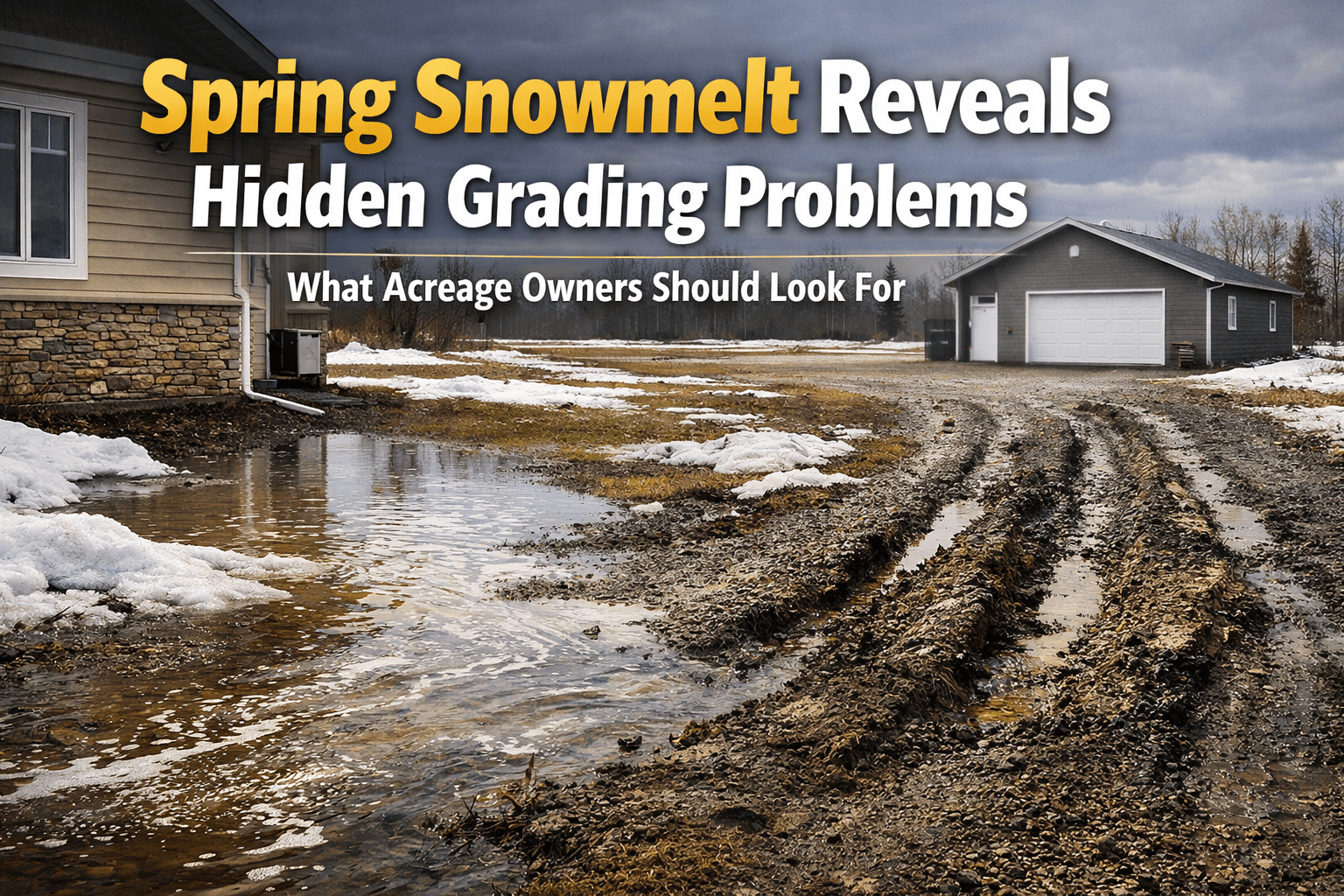
During spring melt, many acreage owners notice grading problems that were hidden during winter.
Some of the most common acreage grading issues include:
• Water pooling near houses, garages, or shops
• Driveway rutting and gravel washouts
• Surface water draining toward buildings
• Water collecting around septic tanks or septic mounds
• Soft or muddy areas that stay wet for long periods
• Soil settling around septic systems or foundations
These issues often indicate that the land is not directing surface water properly. Identifying these problems early allows homeowners to correct grading issues before they become more expensive to repair.
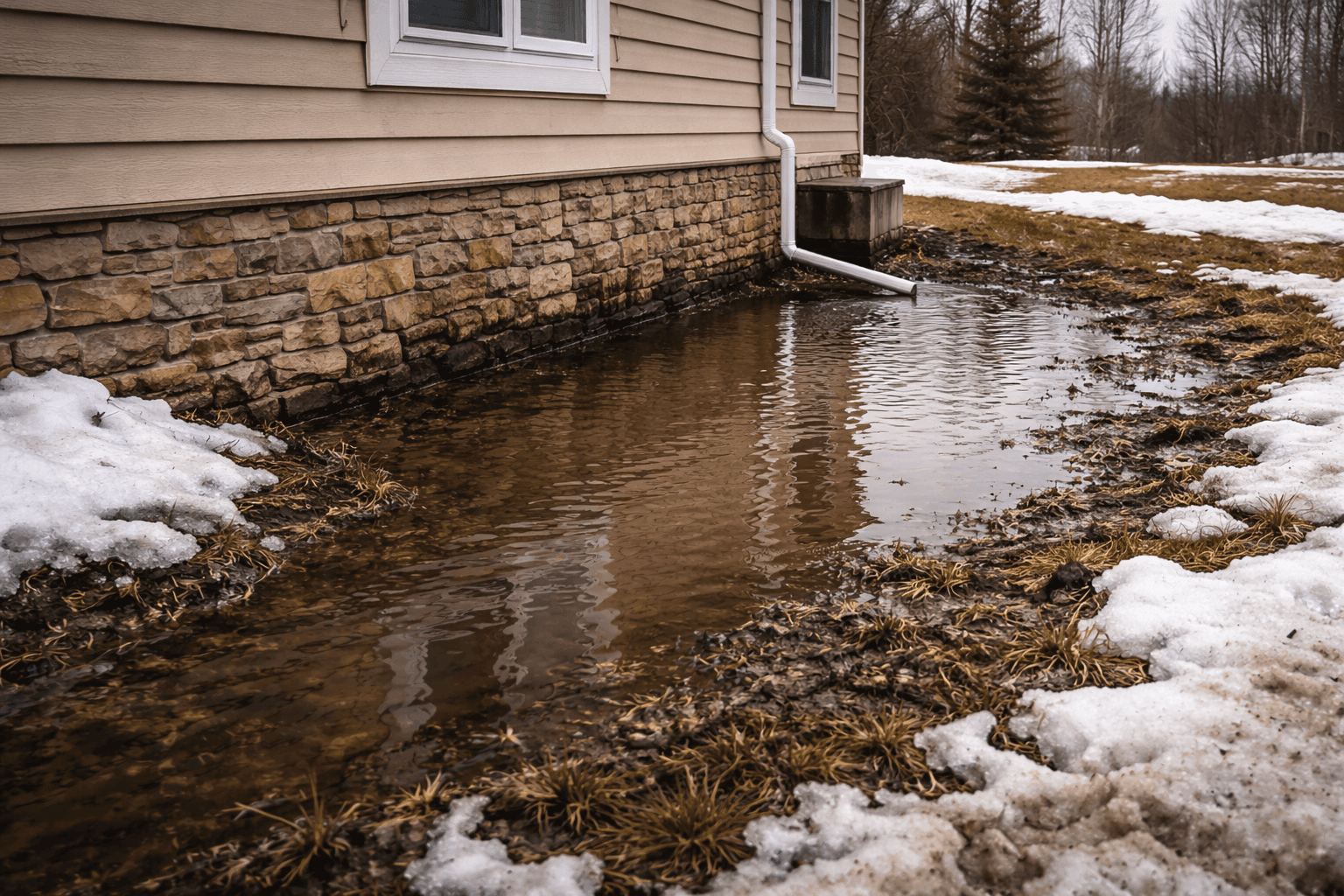
One of the most important areas to inspect during spring melt is the grading around buildings.
Water should always drain away from structures, including:
Houses
Garages
Shops
Barns
Detached buildings
When grading around a house or garage is incorrect, melting snow and rainwater can collect near foundations or begin flowing toward the building.
Common warning signs include:
Water pooling near the foundation
Ground sloping toward the building
Saturated soil close to the structure
Erosion forming along the foundation wall
These conditions often indicate problems with acreage grading around the structure.
Over time, improper grading around buildings can lead to:
Water infiltration into basements
Frost damage to foundations
Soil erosion near footings
Long-term moisture issues around structures
In many cases, these problems develop because the original final grade was never properly completed after construction.
Correcting these types of grading issues typically involves adjusting the slope of the soil around the building so water naturally drains away. In some cases, areas may need to be regraded or additional surface drainage may be installed to improve water flow.
The key goal is simple: surface water should always move away from buildings, not toward them.
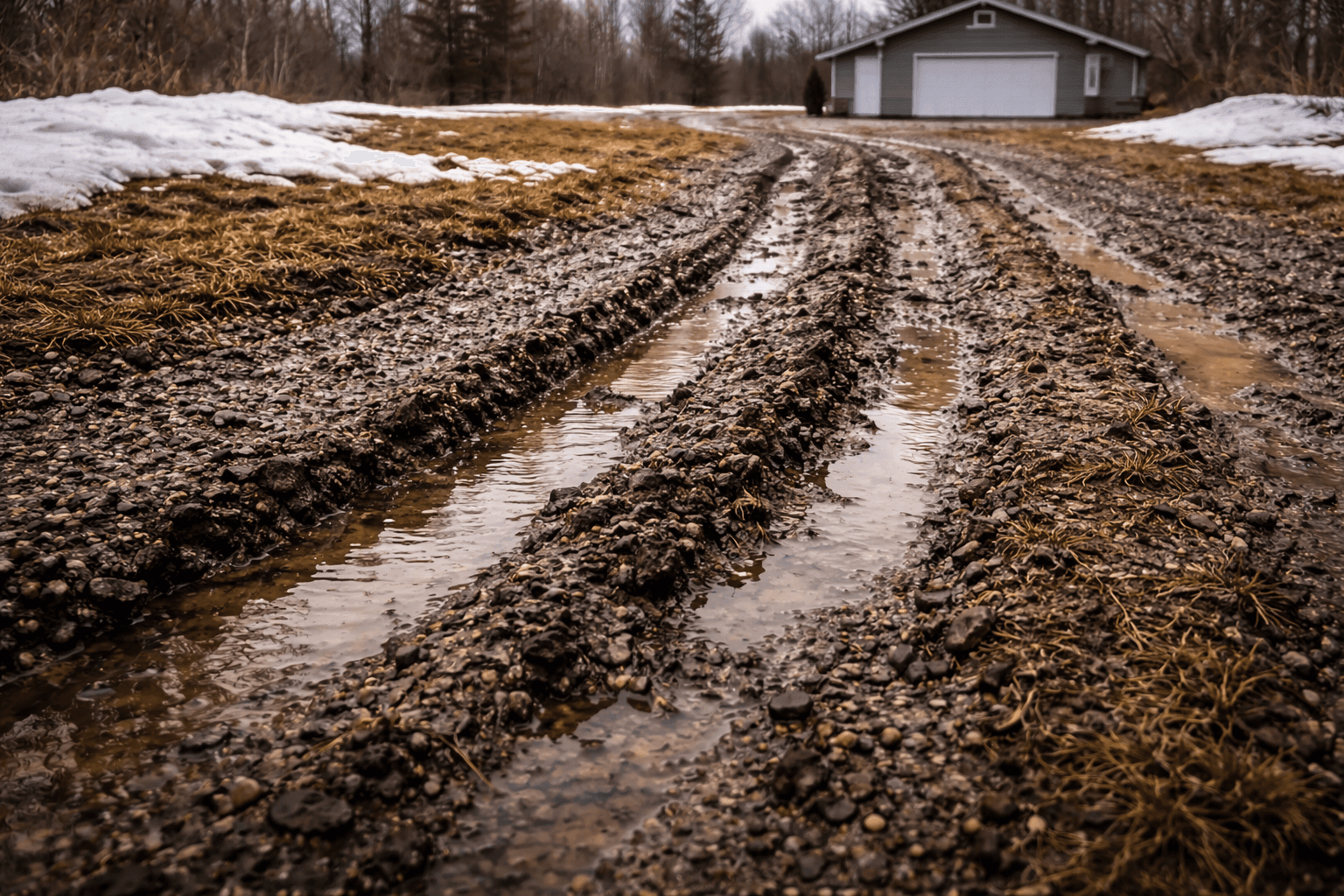
Spring snowmelt is also when many driveway grading issues begin to appear.
Long gravel driveways common on acreages in Parkland County often experience heavy freeze-thaw cycles during winter. When snow begins melting, weaknesses in the driveway structure quickly become visible.
Some of the most common signs include:
Deep ruts forming in the driveway
Water pooling in low areas
Gravel washing off the surface
Soft or muddy sections that remain wet
These issues usually indicate that the driveway grading has deteriorated or that drainage was never properly established.
A well-graded driveway should allow water to shed off the surface. If water sits directly on the driveway, it quickly begins breaking down the gravel structure.
Over time, this leads to:
Worsening ruts
Washed-out sections
Increased maintenance requirements
Poor driving conditions
In many cases, driveway grading issues occur because the driveway surface has gradually lost its shape. Without proper grading, water begins collecting in low areas instead of draining off the sides.
Correcting these problems often involves:
Reshaping the driveway surface
Re-establishing proper slope
Adding new gravel material
Improving surface drainage along the driveway edges
Addressing these problems early in the spring can prevent further damage throughout the year.
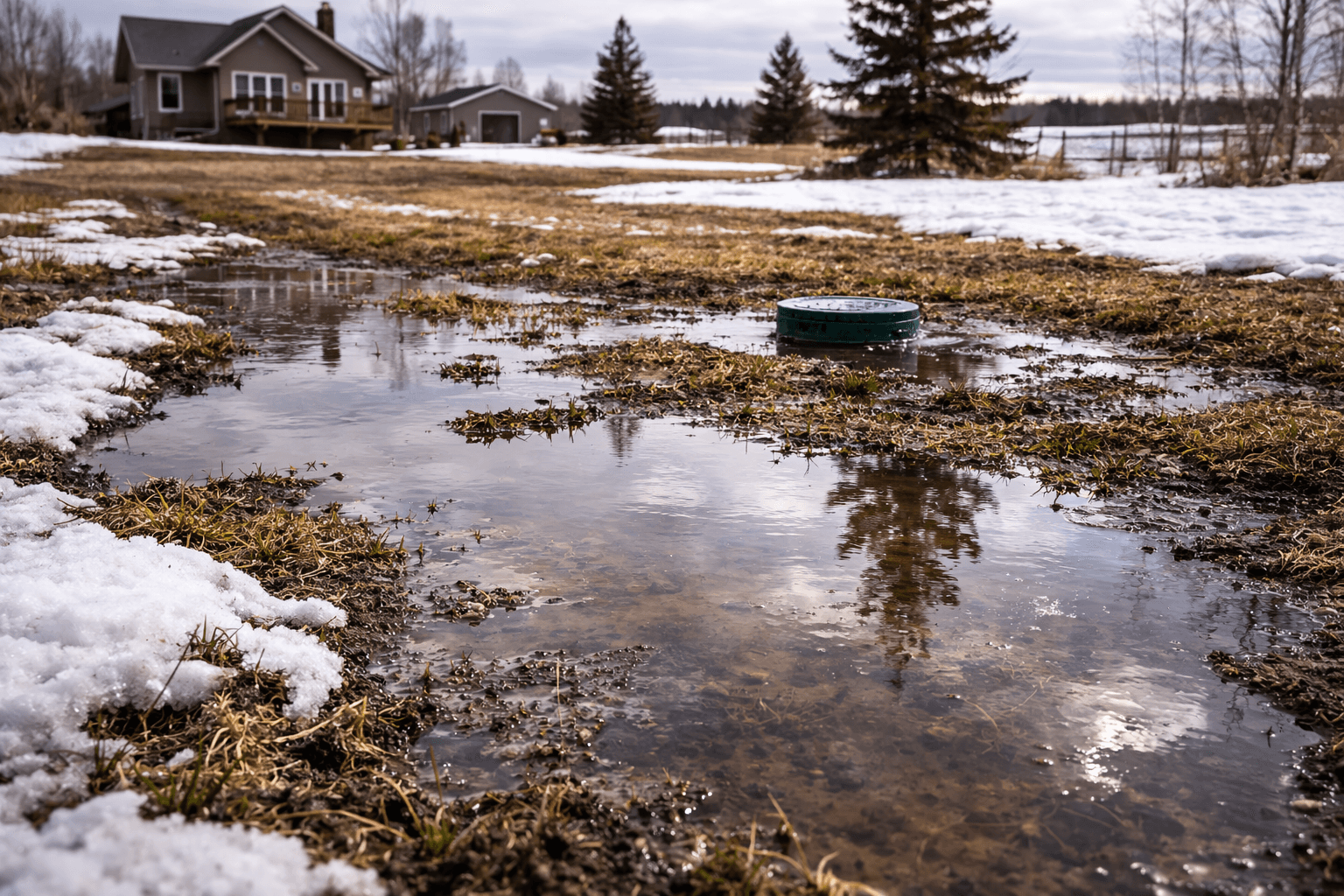
Septic systems are another area where acreage drainage and grading problems can become visible during spring melt.
Because septic systems rely on soil absorption, they are particularly sensitive to improper grading and surface water movement.
Areas homeowners should inspect include:
The septic tank area
The septic field
Septic mound systems
Some of the most common signs of grading around septic systems issues include:
Water pooling near septic tanks
Depressions forming above the tank location
Erosion along septic mound slopes
Surface water draining toward the septic field
These issues often occur when the soil above the system settles over time or when grading was never properly restored after installation.
For example, grading around a septic tank should always direct water away from the tank and surrounding piping. When water collects above the system, it can lead to excessive moisture in the surrounding soil.
Similarly, septic mound grading is important because erosion or poor drainage can weaken the mound structure and affect system performance.
If surface water begins flowing toward a septic field, it can saturate the soil and reduce the system’s ability to properly treat wastewater.
Correcting these issues generally involves:
Adjusting the surrounding grade
Directing surface water away from the system
Restoring soil coverage over tanks and pipes
Repairing erosion around septic mounds
Maintaining proper grading around septic systems helps protect both the functionality and lifespan of the system.
Many acreage grading issues first appear as small warning signs during spring snowmelt.
Homeowners should pay attention to how water moves across the property as the snow melts.
Some common early indicators include:
Water flowing toward buildings
Water pooling in low areas of the yard
Muddy spots that stay wet long after snow melts
Deep ruts forming in driveways
Soil settling around septic tanks
Erosion forming after heavy melt or rainfall
These types of rural drainage problems and acreage grading issues often indicate that the land surface is not directing water properly.
Spring melt acts almost like a natural drainage test. It reveals exactly how water travels across your acreage, which makes it one of the best times to evaluate grading conditions.
By observing these patterns early in the season, homeowners can prevent minor drainage issues from becoming larger problems later on.
Many spring drainage problems can be traced back to issues with rough grade or final grade work during construction.
When a home, garage, or shop is built, the land is typically shaped in two stages.
Rough grade is the initial shaping of the land during construction.
At this stage, heavy equipment moves large volumes of soil to establish general elevations and slopes. The focus is on preparing the site for buildings, driveways, and utilities.
However, rough grade alone is not enough to ensure proper drainage.
Final grade is the finishing stage where the land is carefully shaped to control surface water flow.
This step ensures:
Water drains away from buildings
Driveways shed water properly
Septic systems remain protected
Surface drainage flows across the property correctly
Unfortunately, on many acreages the final grading stage is rushed or never fully completed. Construction activities, landscaping changes, or soil settlement can also alter the original grading.
When final grading is incomplete, acreage drainage problems often begin appearing during spring melt.
These problems may not become obvious until months or even years after construction, when water begins collecting in the wrong areas.
Proper acreage grading and drainage design is essential to maintaining long-term water flow across the property.
If you notice acreage grading issues during spring melt, it does not necessarily mean a major reconstruction is required.
Many grading and drainage problems can be corrected relatively easily if they are identified early.
The first step is simply observing how water moves across your property during the spring thaw.
Watch for:
Areas where water pools
Water flowing toward structures
Soft or muddy ground that stays wet
Erosion forming after snowmelt
Understanding how water travels across the land helps determine what type of grading adjustments may be needed.
At Prairie Acre Developments, we work with acreage owners in Parkland County to help correct and prevent grading issues through services such as:
Acreage grading
Rough grade and final grade work
Drainage corrections
Septic installation and grading
Acreage planning and site layout
Proper planning and grading adjustments can significantly improve drainage and help protect the long-term condition of the property.
Spring snowmelt provides one of the best opportunities to identify acreage grading issues before they become expensive problems.
As snow melts and water begins moving across the land, it reveals how well the grading on your property is actually functioning.
By paying attention to signs such as pooling water, driveway rutting, erosion, or settling around septic systems, acreage owners can identify acreage drainage problems early.
Proper acreage grading and drainage design plays a major role in protecting:
Houses and foundations
Garages and shops
Septic systems
Gravel driveways
Long-term property value
If you notice drainage concerns during spring melt, it is worth evaluating the grading conditions across your property.
In many cases, small grading corrections made early can prevent much larger issues down the road.
Spring snowmelt is one of the best times of the year to identify acreage grading issues and drainage problems around your property in Parkland County.
During the winter months, snow and frozen ground hide many underlying grading problems. But once temperatures begin to rise and snow begins melting, water starts moving across the surface of the land. That movement often reveals acreage drainage problems, improper slopes, and grading issues that were not obvious during the rest of the year.
Many acreage owners first notice problems during spring melt such as:
Water pooling near buildings
Soft or muddy areas in the yard
Deep ruts forming in gravel driveways
Soil settling around septic tanks
Surface water flowing in the wrong direction
These types of acreage grading issues may seem minor at first, but they often indicate underlying drainage problems that can lead to long-term damage if ignored.
Spring melt provides a natural opportunity to observe how water flows across your property. By identifying problems early, homeowners can correct grading issues before they affect foundations, septic systems, or driveways.
Below are some of the most common acreage grading and drainage issues property owners in Parkland County should watch for during spring snowmelt.
During spring melt, many acreage owners notice grading problems that were hidden during winter.
Some of the most common acreage grading issues include:
• Water pooling near houses, garages, or shops
• Driveway rutting and gravel washouts
• Surface water draining toward buildings
• Water collecting around septic tanks or septic mounds
• Soft or muddy areas that stay wet for long periods
• Soil settling around septic systems or foundations
These issues often indicate that the land is not directing surface water properly. Identifying these problems early allows homeowners to correct grading issues before they become more expensive to repair.
One of the most important areas to inspect during spring melt is the grading around buildings.
Water should always drain away from structures, including:
Houses
Garages
Shops
Barns
Detached buildings
When grading around a house or garage is incorrect, melting snow and rainwater can collect near foundations or begin flowing toward the building.
Common warning signs include:
Water pooling near the foundation
Ground sloping toward the building
Saturated soil close to the structure
Erosion forming along the foundation wall
These conditions often indicate problems with acreage grading around the structure.
Over time, improper grading around buildings can lead to:
Water infiltration into basements
Frost damage to foundations
Soil erosion near footings
Long-term moisture issues around structures
In many cases, these problems develop because the original final grade was never properly completed after construction.
Correcting these types of grading issues typically involves adjusting the slope of the soil around the building so water naturally drains away. In some cases, areas may need to be regraded or additional surface drainage may be installed to improve water flow.
The key goal is simple: surface water should always move away from buildings, not toward them.
Spring snowmelt is also when many driveway grading issues begin to appear.
Long gravel driveways common on acreages in Parkland County often experience heavy freeze-thaw cycles during winter. When snow begins melting, weaknesses in the driveway structure quickly become visible.
Some of the most common signs include:
Deep ruts forming in the driveway
Water pooling in low areas
Gravel washing off the surface
Soft or muddy sections that remain wet
These issues usually indicate that the driveway grading has deteriorated or that drainage was never properly established.
A well-graded driveway should allow water to shed off the surface. If water sits directly on the driveway, it quickly begins breaking down the gravel structure.
Over time, this leads to:
Worsening ruts
Washed-out sections
Increased maintenance requirements
Poor driving conditions
In many cases, driveway grading issues occur because the driveway surface has gradually lost its shape. Without proper grading, water begins collecting in low areas instead of draining off the sides.
Correcting these problems often involves:
Reshaping the driveway surface
Re-establishing proper slope
Adding new gravel material
Improving surface drainage along the driveway edges
Addressing these problems early in the spring can prevent further damage throughout the year.
Septic systems are another area where acreage drainage and grading problems can become visible during spring melt.
Because septic systems rely on soil absorption, they are particularly sensitive to improper grading and surface water movement.
Areas homeowners should inspect include:
The septic tank area
The septic field
Septic mound systems
Some of the most common signs of grading around septic systems issues include:
Water pooling near septic tanks
Depressions forming above the tank location
Erosion along septic mound slopes
Surface water draining toward the septic field
These issues often occur when the soil above the system settles over time or when grading was never properly restored after installation.
For example, grading around a septic tank should always direct water away from the tank and surrounding piping. When water collects above the system, it can lead to excessive moisture in the surrounding soil.
Similarly, septic mound grading is important because erosion or poor drainage can weaken the mound structure and affect system performance.
If surface water begins flowing toward a septic field, it can saturate the soil and reduce the system’s ability to properly treat wastewater.
Correcting these issues generally involves:
Adjusting the surrounding grade
Directing surface water away from the system
Restoring soil coverage over tanks and pipes
Repairing erosion around septic mounds
Maintaining proper grading around septic systems helps protect both the functionality and lifespan of the system.
Many acreage grading issues first appear as small warning signs during spring snowmelt.
Homeowners should pay attention to how water moves across the property as the snow melts.
Some common early indicators include:
Water flowing toward buildings
Water pooling in low areas of the yard
Muddy spots that stay wet long after snow melts
Deep ruts forming in driveways
Soil settling around septic tanks
Erosion forming after heavy melt or rainfall
These types of rural drainage problems and acreage grading issues often indicate that the land surface is not directing water properly.
Spring melt acts almost like a natural drainage test. It reveals exactly how water travels across your acreage, which makes it one of the best times to evaluate grading conditions.
By observing these patterns early in the season, homeowners can prevent minor drainage issues from becoming larger problems later on.
Many spring drainage problems can be traced back to issues with rough grade or final grade work during construction.
When a home, garage, or shop is built, the land is typically shaped in two stages.
Rough grade is the initial shaping of the land during construction.
At this stage, heavy equipment moves large volumes of soil to establish general elevations and slopes. The focus is on preparing the site for buildings, driveways, and utilities.
However, rough grade alone is not enough to ensure proper drainage.
Final grade is the finishing stage where the land is carefully shaped to control surface water flow.
This step ensures:
Water drains away from buildings
Driveways shed water properly
Septic systems remain protected
Surface drainage flows across the property correctly
Unfortunately, on many acreages the final grading stage is rushed or never fully completed. Construction activities, landscaping changes, or soil settlement can also alter the original grading.
When final grading is incomplete, acreage drainage problems often begin appearing during spring melt.
These problems may not become obvious until months or even years after construction, when water begins collecting in the wrong areas.
Proper acreage grading and drainage design is essential to maintaining long-term water flow across the property.
If you notice acreage grading issues during spring melt, it does not necessarily mean a major reconstruction is required.
Many grading and drainage problems can be corrected relatively easily if they are identified early.
The first step is simply observing how water moves across your property during the spring thaw.
Watch for:
Areas where water pools
Water flowing toward structures
Soft or muddy ground that stays wet
Erosion forming after snowmelt
Understanding how water travels across the land helps determine what type of grading adjustments may be needed.
At Prairie Acre Developments, we work with acreage owners in Parkland County to help correct and prevent grading issues through services such as:
Acreage grading
Rough grade and final grade work
Drainage corrections
Septic installation and grading
Acreage planning and site layout
Proper planning and grading adjustments can significantly improve drainage and help protect the long-term condition of the property.
Spring snowmelt provides one of the best opportunities to identify acreage grading issues before they become expensive problems.
As snow melts and water begins moving across the land, it reveals how well the grading on your property is actually functioning.
By paying attention to signs such as pooling water, driveway rutting, erosion, or settling around septic systems, acreage owners can identify acreage drainage problems early.
Proper acreage grading and drainage design plays a major role in protecting:
Houses and foundations
Garages and shops
Septic systems
Gravel driveways
Long-term property value
If you notice drainage concerns during spring melt, it is worth evaluating the grading conditions across your property.
In many cases, small grading corrections made early can prevent much larger issues down the road.