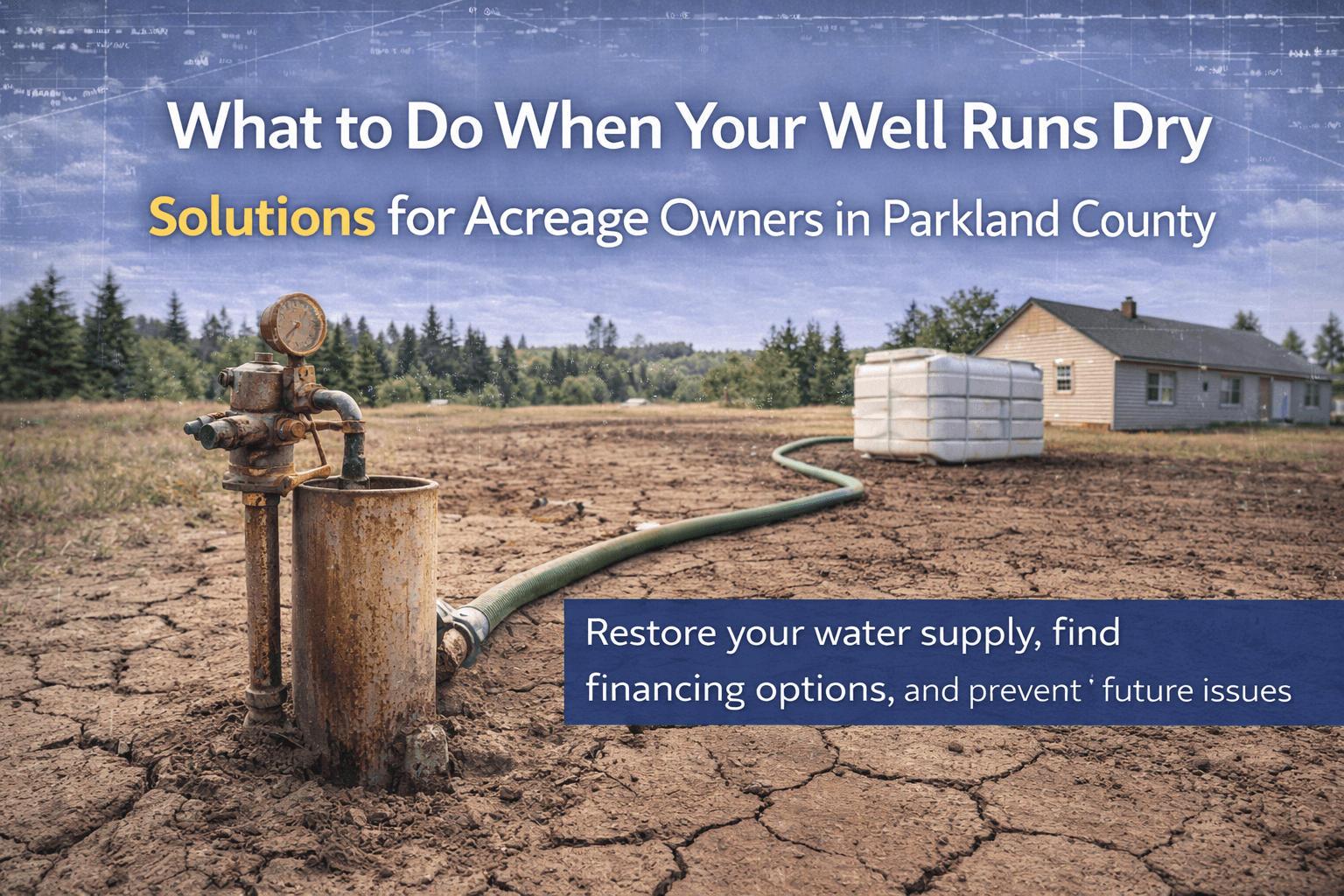
When a well runs dry on a Parkland County acreage, there are practical short-term and long-term solutions to restore water and protect your property.
3 min read
Introduction
For acreage owners in Parkland County, a reliable water source is essential. When a well begins to fail — whether through reduced pressure, loss of water, or contamination — it can feel like an immediate crisis.
While the situation can be stressful, there are practical steps and solutions that can restore water quickly while longer-term repairs are planned.
Check the pump first
When water stops flowing, the first thing to investigate is the well pump.
In many cases, the well itself is still viable and only the pump has failed. Pump replacement is far more affordable than drilling a new well and is often the fastest solution.
Older wells with steel casings can present challenges, as corrosion or scale buildup may make pump removal difficult. In these situations, a professional well technician can assess whether repair is feasible or if further work is required.
Temporary water solutions
If pump repairs or well maintenance will take time, temporary water delivery can keep your home operational.
A temporary supply must use safe potable water, suitable tanks and sanitary connections. Have a qualified plumber or water-well contractor arrange the connection and required backflow protection; do not improvise a connection through an outdoor tap.
Depending on household usage, these tanks can last for weeks and can be refilled as needed until permanent repairs are completed.
Storing and protecting water tanks
Ideally, temporary water tanks should be stored in a garage to protect them from freezing temperatures.
If indoor storage isn’t available, tanks can be kept outdoors with proper winter protection. Heat trace installed on pumps and critical plumbing helps prevent freezing, and additional insulation or weather protection can further reduce risk during cold Parkland County winters.
Assessing the underlying well issue
Once temporary water is secured, the well itself should be professionally inspected.
Common well issues include:
Pump failure
Low or declining water levels
Damaged or deteriorating casing
Contamination from surface water or debris
A proper assessment helps determine whether the well can be repaired, rehabilitated, or if a new well is required.
Financing well repairs
Well repairs and replacements can be costly, but payment arrangements vary by contractor and must be confirmed directly.
For acreage owners in Parkland County, financing can make it easier to address well issues promptly without delaying critical repairs.
Preventing future well problems
Regular maintenance helps reduce the risk of future well failures.
Routine water testing, pump inspections, and monitoring water usage — especially during dry periods — can help extend the life of a well. When planning future acreage development, understanding the well’s location also helps prevent accidental damage during excavation or landscaping work.
Conclusion
When a well runs dry, acting quickly and methodically makes a major difference.
Checking the pump first, using temporary water solutions, and arranging a professional assessment helps restore water access while protecting long-term property value. With the right approach, acreage owners can manage well issues effectively and keep their properties running smoothly in Parkland County.
Related acreage guidance
Buying an Acreage in Parkland County: What to Check Before You Buy
First-Time Acreage Owners: What to Know Before Buying in Parkland County
Before you act
Loss of water can involve the pump, controls, water level or water quality. Use a qualified water-well contractor for diagnosis, and a safe alternative drinking-water source if contamination is suspected. Prairie Acre’s site work does not replace well servicing.
YOUR NEXT STEP
Let’s Get Your Project Done Right
Need help applying this to your property? Send the location, your plans and the concern you want to resolve.